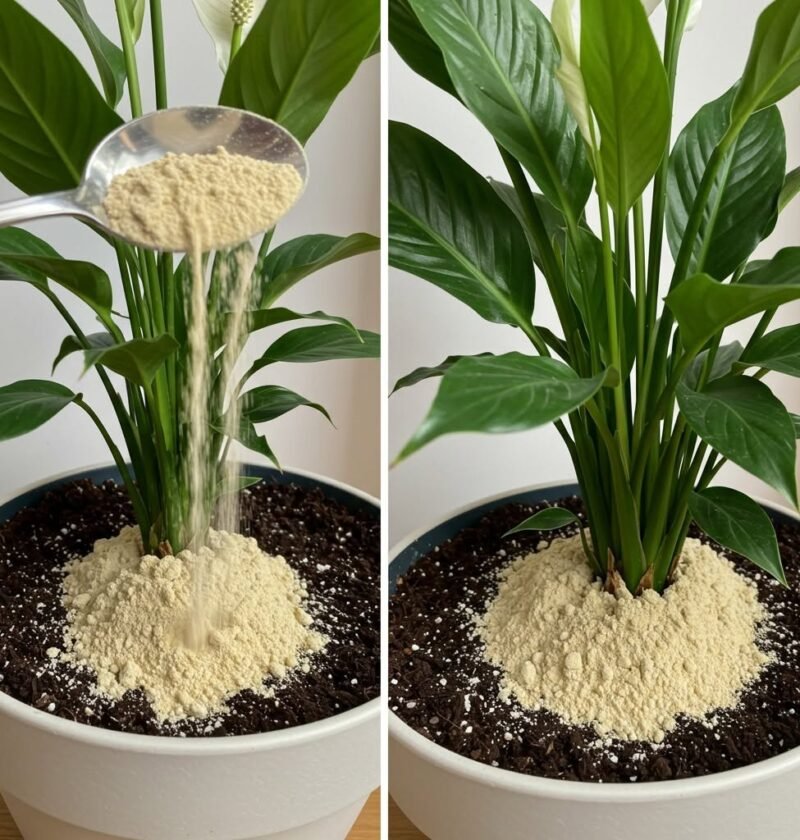
When viral gardening hacks and clickbait titles claim that a single kitchen ingredient can make a Peace Lily (Spathiphyllum) bloom continuously or for up to a decade straight, they are usually referring to rice water or nutrient-rich organic boosters like banana peel water.
While no single trick can magically force a plant to bloom uninterrupted for 10 years without proper foundational care, these kitchen DIY fertilizers do provide genuine nutritional benefits that can revive a stubborn, flowerless plant.
Here is the breakdown of the “secret ingredient” trend, how it works, and what your Peace Lily actually needs to thrive long-term.
The Secret Ingredient: Rice Water (or Banana Peels)
The most common culprit behind these viral plant hacks is strained rice water (the nutrient-dense water left over from rinsing raw rice or soaking it).
-
Why it helps: As rice is rinsed or soaked, it releases starches, B-vitamins, and essential trace minerals like potassium, magnesium, phosphorus, and nitrogen.
-
The blooming connection: While nitrogen pushes green leaf growth, phosphorus and potassium are the heavy-lifting macronutrients responsible for triggering root strength and flower development. When a Peace Lily is starved for phosphorus, it will grow lush green leaves but refuse to push out white spathes (flowers).
How Gardeners Use It Safely:
-
Rinse or Soak: Take a cup of uncooked white rice and mix it in water until the water turns milky white, extracting the starches and minerals.
-
Strain Completely: You must strain the liquid thoroughly. Leaving actual rice grains or unfiltered sediment in the soil will rot, attract fungus gnats, and cause mold growth.
-
Apply Sparingly: Use it as a substitute for regular watering only once a month. Overdoing starches can sour the soil and suffocate the roots.
The Reality Behind a 10-Year-Long Lifespan
Peace Lilies are famously hardy, resilient houseplants that can live for many years (often well over a decade) with proper care, but they naturally go through cycles of blooming and resting. To actually keep your Peace Lily healthy and flowering year after year, the “ingredient” is only a small piece of the puzzle.
True longevity and consistent blooms require managing the basics:
-
Bright, Indirect Light: The number one reason Peace Lilies stop blooming is a lack of light. While they tolerate low-light offices well, they need bright, indirect sunlight (like near an east-facing window) to gather the energy required to flower.
-
Proper Watering Habits: Peace lilies are dramatic and will droop completely when thirsty, but chronic underwatering or waterlogged soil will shock the plant. They prefer soil that is kept evenly moist, allowing the top inch to dry out slightly between waterings.
-
Humidity: Native to tropical rainforests, they crisp up and struggle in dry indoor air. Misting them or placing them near a humidifier helps keep foliage lush.
-
Repotting: If your Peace Lily is root-bound (roots circling densely out of the drainage holes), it will exhaust the soil nutrients completely. Upgrading to a slightly larger pot every 2 to 3 years gives it the space and fresh soil it needs to keep pushing out blooms.