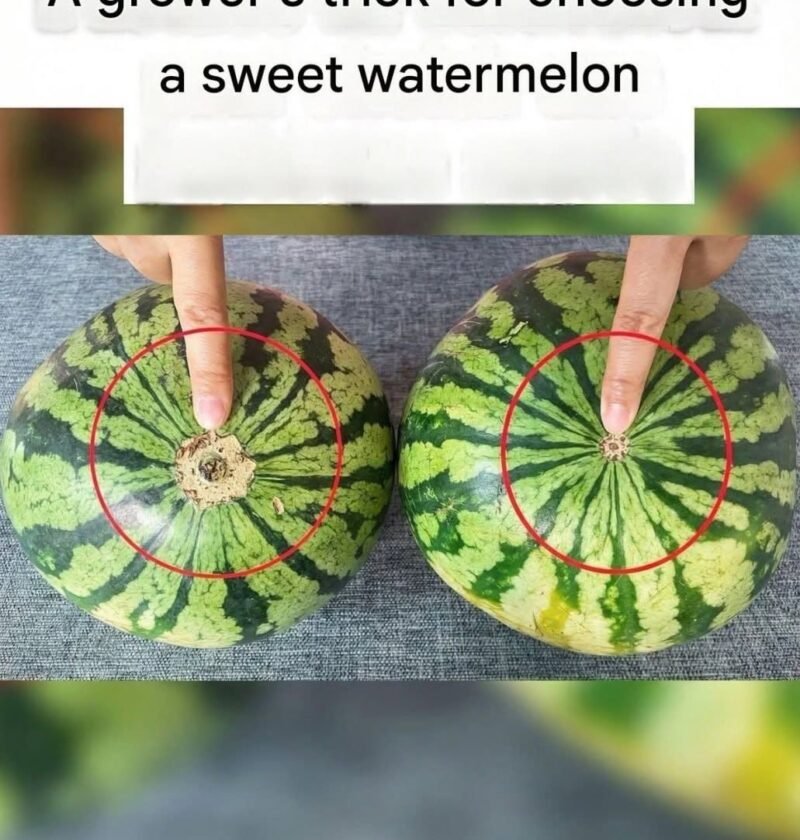
Absolutely. Choosing a sweet watermelon is easier when you know what to look for:
- Look for a large creamy-yellow field spot — this is the area where the watermelon rested on the ground. A deep yellow/cream spot generally suggests it had time to ripen.
- Choose a dull, rather than shiny, rind — a slightly matte appearance can indicate a ripe melon.
- Look for brown webbing or sugar spots — these marks can occur as the fruit develops and are often associated with sweetness.
- Check the shape — choose a symmetrical, evenly developed watermelon without major dents or irregular bulges.
- Pick one that feels heavy for its size — this suggests good water content.
- Don’t rely on tapping alone — a deep, resonant sound can be a useful clue, but it’s subjective and not a guarantee of sweetness.
- Check the stem if it’s visible — a dried, brownish stem is generally more consistent with a ripe melon than a fresh green stem.
- Avoid soft, bruised, or damaged areas — these can indicate deterioration.
- Don’t assume bigger means sweeter — size isn’t a reliable measure of sweetness.
- Compare several melons side by side — weight relative to size and the field spot are more useful clues than any single visual feature.
Best quick rule: Pick a watermelon that is heavy for its size, symmetrical, dull-looking, and has a large creamy-yellow field spot. No external trick can guarantee sweetness, but these clues improve your odds considerably.