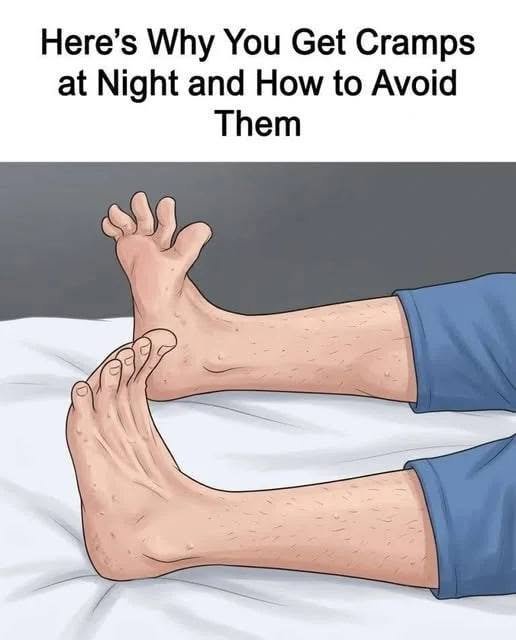
7 Common Causes of Nighttime Leg Cramps
-
Muscle fatigue and overexertion: Hard workouts, heavy lifting, or long hours standing on hard surfaces drain local muscle energy and trigger overactive nerve firing hours later at rest.
-
Prolonged sitting or sleep posture: Long hours sitting shorten the calf muscles and Achilles tendon. Pointing toes downward (plantar flexion) during sleep keeps the calf in a shortened, spasm-prone position.
-
Dehydration: Low fluid volume reduces blood flow to muscles and shifts fluid balance around nerve endings, making muscles twitch and lock up more easily.
-
Electrolyte imbalances: Low magnesium, potassium, or calcium disrupt electrical signals needed for muscles to contract and relax smoothly.
-
Medications: Certain drugs raise cramp risk, including diuretics, statins, inhaled long-acting beta-agonists, and intravenous iron sucrose.
-
Pregnancy: Extra weight, shifted circulation, and higher mineral needs frequently cause calf cramps, especially in the second and third trimesters.
-
Age-related nerve and tendon changes: Adults over 50 often experience gradual tendon shortening and motor neuron changes that make night cramps more common.
How to Stop a Cramp Immediately
-
Pull toes upward: Straighten your leg and pull your toes toward your shin. If you cannot reach your foot, loop a towel or belt around the ball of your foot and pull gently.
-
Stand and bear weight: Stand flat-footed on the floor and shift weight onto the cramped leg while leaning slightly forward to stretch the calf.
-
Massage and warm the muscle: Knead the tight muscle firmly by hand, then apply a warm cloth or heating pad to boost blood flow and ease lingering tension.
-
Walk slowly: Take a few slow steps once the acute spasm stops to reset nerve signals before lying back down.
Natural Strategies to Prevent Future Cramps
-
Stretch before bed: Do a 30-second standing wall calf stretch and hamstring stretch on each leg every night before sleep.
-
Keep bedding loose: Leave slack at the foot of the bed so heavy blankets do not push toes downward while you sleep.
-
Drink fluids steadily: Sip water across the day rather than drinking large amounts right before bed.
-
Eat mineral-rich foods: Include magnesium sources (pumpkin seeds, almonds, spinach), potassium sources (bananas, sweet potatoes, avocados), and calcium sources (yogurt, leafy greens).
-
Wear supportive shoes: Pick footwear with solid arch support and cushioning when standing or walking on hard surfaces.
When to see a doctor: Seek medical care if cramps wake you often, cause ongoing muscle weakness or swelling, or come with skin redness and warmth in the leg.