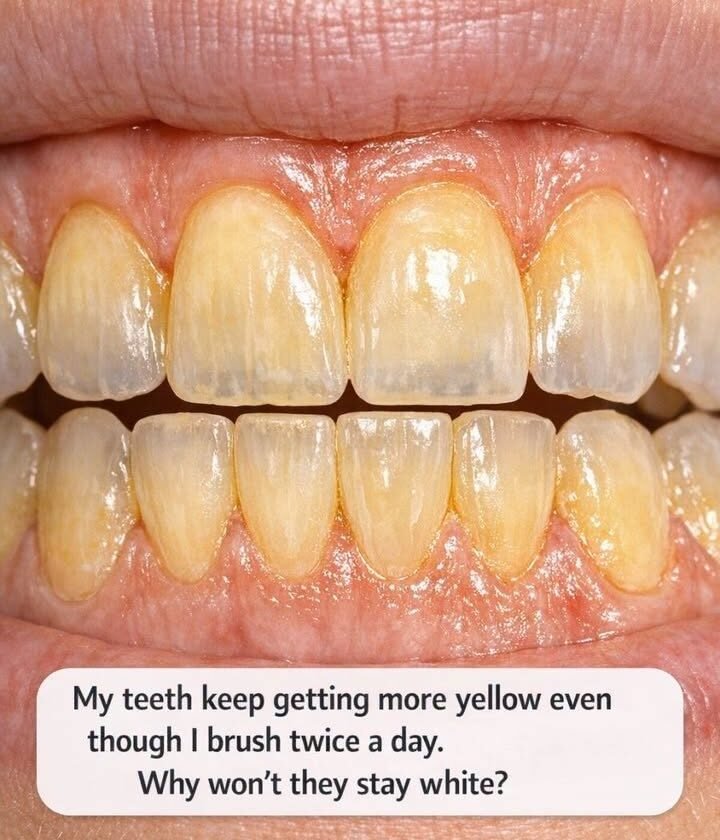
It is deeply frustrating when you brush religiously twice a day, yet your teeth still seem to get progressively more yellow. The hard truth is that brushing alone cannot stop natural tooth discoloration, because the yellowing process happens beneath and beyond the outer surface of your enamel.
To understand why your teeth won’t stay white, it helps to look at what is actually happening to your tooth structure over time.
The Real Reasons Your Teeth Are Yellowing
-
The Core of Your Teeth is Naturally Yellow (Dentin)
-
Beneath your hard, white outer shell (enamel) lies a layer called dentin, which is naturally yellowish-brown. As you age, your enamel naturally thins out from everyday wear and tear. As that protective outer layer gets thinner, the yellowish dentin underneath shows through more prominently.
-
-
Surface Stains from Food, Drink, and Habits
-
Even with regular brushing, microscopic pores in your enamel absorb pigments (chromogens) from everyday items. Coffee, black tea, red wine, dark sodas, tomato sauces, and berries leave behind stubborn micro-stains that standard toothpaste bristles and mild abrasives cannot fully lift once they settle in.
-
Smoking or using tobacco products also rapidly stains teeth a deep yellow or brown.
-
-
Your Genetics Play a Major Role
-
Just like some people are born with naturally curly hair or tall statures, the thickness and natural color of your tooth enamel are largely determined by your genetics. Some people simply have naturally thinner or more translucent enamel, making their teeth look inherently more yellow no matter how well they brush.
-
-
Certain Medications and Past Health Factors
-
If you were prescribed certain antibiotics (like tetracycline) as a child while your permanent teeth were still forming, or if you had high exposure to fluoride during childhood (dental fluorosis), it can cause deep, intrinsic discoloration that brushing cannot touch.
-
Why Standard Brushing Falls Short
Toothpaste is designed to clean away plaque, freshen breath, and provide a very gentle abrasive polish to remove fresh food debris. However, toothpaste cannot bleach or alter the natural chemical color of your enamel and dentin. Think of it like a white cotton shirt: washing it with regular detergent keeps it clean, but it won’t reverse natural fading or deep-set stains over the years.
What Can You Actually Do About It?
If you want to restore a whiter shade, you have to look beyond standard brushing:
-
Professional Dental Cleanings: If your yellowing is partly driven by hardened plaque (tartar) or stubborn surface buildup, a dental hygienist can scale and polish your teeth in a way brushing cannot match.
-
Whitening Treatments (Peroxide-Based): To actually change the color of your teeth, you need a bleaching agent (hydrogen peroxide or carbamide peroxide) found in whitening strips, custom dental trays, or professional in-office treatments. These agents penetrate the enamel to chemically break down deep-set stain molecules.
-
Protect Your Enamel: Avoid aggressive brushing with hard-bristled toothbrushes, as scrubbing too hard actually wears down your enamel faster, exposing more of that yellow dentin.
When to Talk to Your Dentist
If you notice that the yellowing happened very suddenly, is uneven, or is accompanied by tooth sensitivity, pain, or dark spots, it is worth having a dentist take a look. They can tell you whether your discoloration is surface-level (extrinsic) or deep-seated (intrinsic) and recommend the safest whitening approach for your specific enamel.