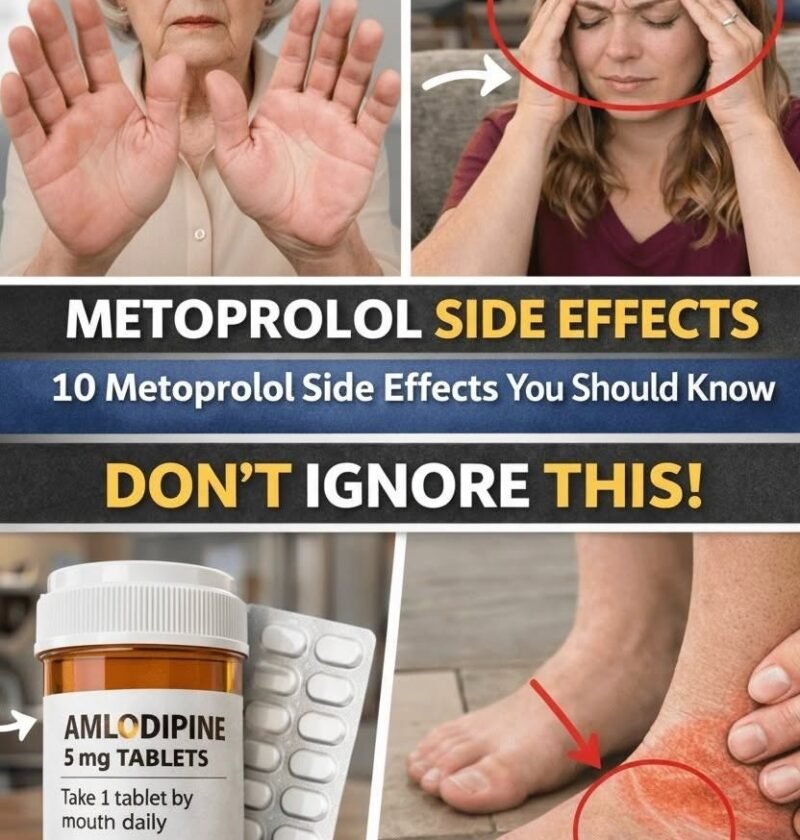
Metoprolol is one of the most commonly prescribed beta-blockers in the world, used to manage high blood pressure, chest pain (angina), and heart failure. Because it works by blocking adrenaline receptors to slow your heart rate and ease the workload on your cardiovascular system, its effects ripple through the entire body.
While doctors regularly warn patients about fatigue or dizziness, several other unexpected side effects can catch you completely off guard.
1. The Hidden Warning System: Masking Low Blood Sugar
If you manage diabetes, this is critical: metoprolol can hide the warning signs of hypoglycemia (low blood sugar). Normally, when your blood sugar plummets, your body releases adrenaline, causing your heart to race, hands to shake, and palms to sweat as an early alert system. Because metoprolol blocks adrenaline and slows your heart rate, those physical warning signals can be completely muffled, leaving you vulnerable to sudden confusion or dizziness without realizing your sugar has crashed.
2. Vivid Nightmares and Sleep Disturbances
Because metoprolol is fat-soluble enough to cross the blood-brain barrier, it directly affects the central nervous system. Many patients are surprised to experience a sudden surge in vivid, bizarre dreams, recurring nightmares, or severe insomnia when starting the medication or adjusting their dose.
3. Perpetually Ice-Cold Hands and Feet
By clamping down on peripheral blood flow to prioritize core organs, metoprolol can leave your fingers and toes feeling like blocks of ice. For people with underlying circulation issues (like Raynaud’s phenomenon), it can trigger intense numbness, color changes, or painful cramping in the extremities.
4. Subtle, Creeping Depression and Brain Fog
It is easy to brush off feeling emotionally flat as everyday stress, but beta-blockers are frequently linked to unexplained mood changes, apathy, and mild-to-moderate depressive symptoms. Some patients also report frustrating “brain fog,” minor memory lapses, or trouble concentrating.
5. Unintended Weight Gain
Many people expect heart medications to keep them trim, but metoprolol can subtly slow your resting metabolic rate and drain your energy levels, making physical activity feel exhausting. Over time, this reduction in calorie burn often translates to gradual, stubborn weight gain.
6. Respiratory Sneak Attacks (Wheezing)
Even if you don’t have asthma, metoprolol can sometimes cause unexpected airway tightening. Because beta-receptors also exist in the lungs, blocking them can trigger mild wheezing, shortness of breath, or a persistent dry cough—mimicking the early signs of bronchitis.
7. Sudden Sexual Dysfunction
A sensitive topic that doctors sometimes forget to mention: because the drug alters blood flow and nervous system signaling, both men and women can experience a sharp drop in libido or difficulty achieving arousal/erection, which can significantly impact adherence to the medication.
8. Gastrointestinal Upset (Not Just “Stomach Flu”)
While less talked about than fatigue, metoprolol frequently triggers digestive quirks in the first few weeks. Patients often report unexpected bouts of diarrhea, persistent nausea, or a dry mouth that doesn’t go away with hydration.
9. Worsening Skin Conditions (Dryness or Psoriasis Flare-Ups)
Beta-blockers are notorious dermatological tricksters. They can cause severe skin dryness, worsen pre-existing psoriasis (triggering scaly, itchy rashes), or even lead to temporary, diffuse hair thinning.
10. The Ultimate Danger: The “Rebound Effect” if Stopped Abruptly
Perhaps the most dangerous surprise isn’t a side effect of taking the drug, but of stopping it too fast. If you abruptly quit metoprolol cold turkey, your body experiences a massive surge of pent-up adrenaline. This rebound effect can trigger a dangerous spike in blood pressure, severe chest pain (angina), or even a sudden heart attack. Always taper beta-blockers under strict medical guidance.
Are you or someone you care for currently taking metoprolol, or have you noticed any unexpected changes since starting a new cardiovascular medication?