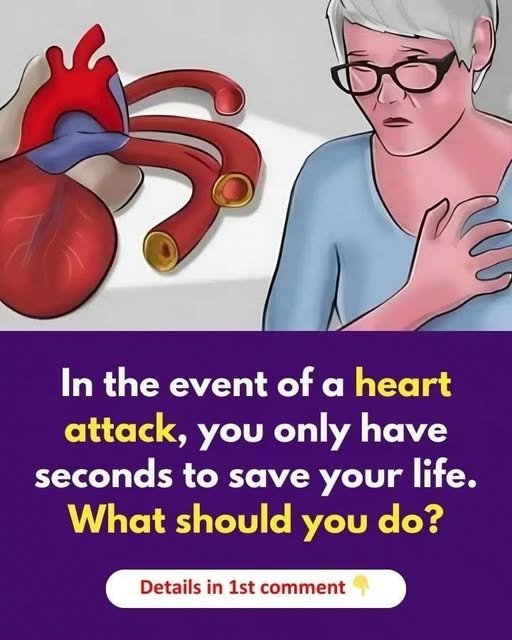
If you think you’re having a heart attack, don’t waste the first seconds
The claim that you have “only seconds” to save yourself is misleading, but every minute matters. A heart attack can worsen and may lead to cardiac arrest, so getting emergency treatment quickly is critical. www.heart.org+1
If you are having symptoms right now
-
Call your local emergency number immediately. Don’t wait to see whether the pain goes away, and don’t drive yourself if emergency medical transport is available.
-
Stop what you’re doing and sit or rest while waiting for help. Avoid exertion. www.heart.org
-
If you’re an alert adult with suspected heart-attack-type chest pain, current first-aid guidance says you may chew and swallow 162–325 mg of aspirin, provided you aren’t allergic to aspirin and haven’t been told by a healthcare professional not to take it. If you’re uncertain whether aspirin is appropriate, it’s reasonable to wait for EMS. American Heart Association CPR
-
If you have prescribed nitroglycerin for chest pain, use it according to your prescription.
-
Don’t use “cough CPR.” Forceful coughing is not a treatment for a heart attack and isn’t recommended. www.heart.org
🚨 If the person collapses
A heart attack and cardiac arrest are not the same thing. If the person becomes unresponsive and isn’t breathing normally (or is only gasping):
-
Call the emergency service.
-
Start Hands-Only CPR, pushing hard and fast in the center of the chest at 100–120 compressions per minute.
-
Get an AED (automated external defibrillator) if one is available and follow its voice instructions. www.heart.org+1
Heart-attack symptoms can include pressure or squeezing in the chest, shortness of breath, cold sweating, nausea, lightheadedness, or discomfort spreading to the arm, back, neck, jaw, or stomach. Symptoms can differ between people. www.heart.org
If you’re experiencing these symptoms now, please call your local emergency service now rather than continuing to read or trying a home remedy.