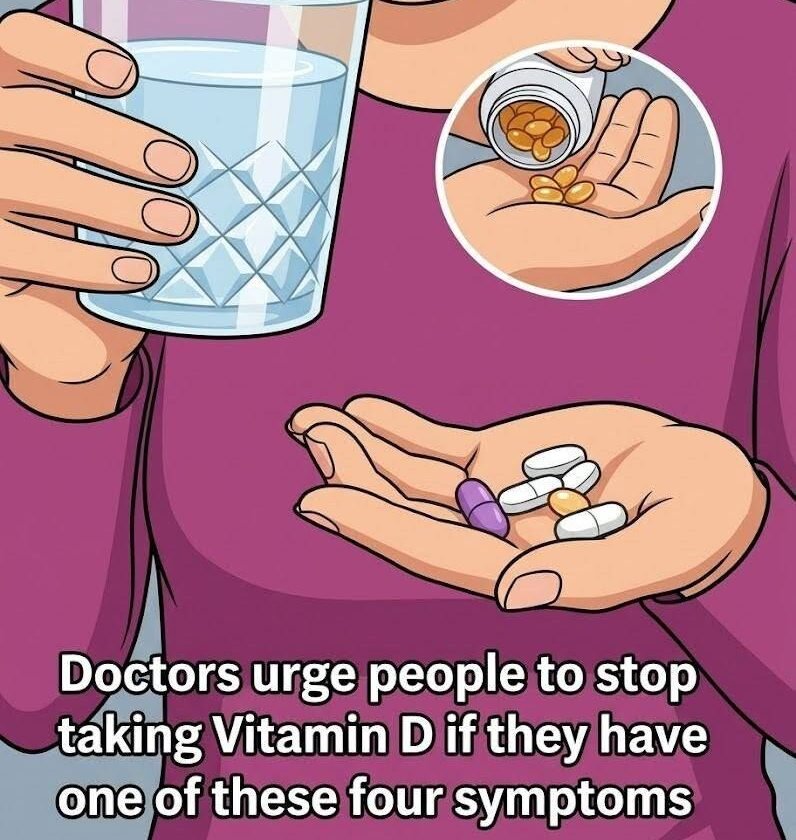
While vitamin D is essential for bone health and immune function, taking high-dose supplements over a long period can lead to a rare condition called vitamin D toxicity (hypervitaminosis D).
Because vitamin D is fat-soluble, your body stores the excess rather than flushing it out. This causes a dangerous buildup of calcium in your bloodstream (hypercalcemia), which triggers specific warning signs.
4 Key Symptoms of Vitamin D Overdose
-
1. Frequent Urination and Excessive Thirst (Polyuria and Polydipsia): Excess calcium forces your kidneys to work overtime to filter and flush it out of your blood. This can leave you running to the bathroom constantly and feeling chronically parched—mimicking symptoms of dehydration or diabetes.
-
2. Nausea, Vomiting, and Loss of Appetite: High blood calcium levels can severely upset your digestive tract. You might suddenly lose interest in food, feel frequently queasy, or experience unexplained stomach pain and vomiting.
-
3. Muscle Weakness, Fatigue, and Aches: While low vitamin D causes fatigue, too much of it messes with the delicate electrolyte balance required for normal muscle contraction. This can leave you feeling deeply sluggish, weak, or suffering from unusual muscle and bone pain.
-
4. Confusion, Brain Fog, or Dizziness: Severe hypercalcemia impacts how your central nervous system functions. It can manifest as mental fatigue, trouble concentrating, irritability, or dizziness.
The Kidney Danger: If left unchecked, the excess calcium driven by vitamin D toxicity can form kidney stones or cause calcium deposits in soft tissues, potentially leading to acute or chronic kidney injury.
Note: Vitamin D toxicity almost never happens from sunlight or diet alone; it is almost always the result of taking high-dose supplements improperly for months. If you suspect you are experiencing toxicity, stop taking the supplement and consult a doctor immediately for a simple blood test to check your calcium and 25-hydroxyvitamin D levels.
Are you currently taking high-dose vitamin D supplements, or experiencing any of these symptoms?