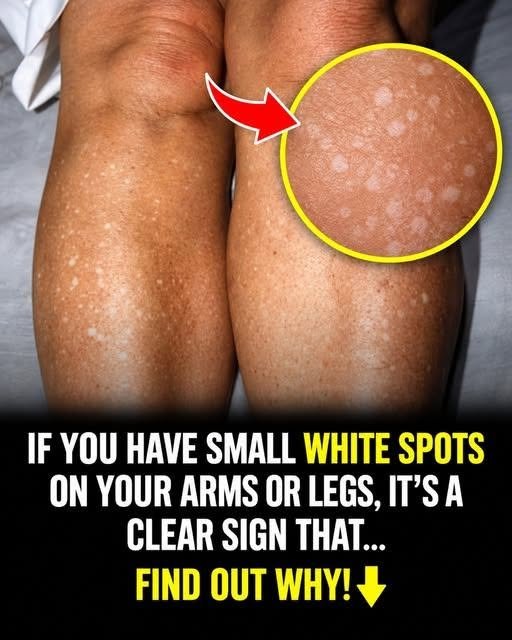
Ah, the classic dermatology cliffhanger! Few things trigger internet hypochondria quite like a vague warning about mysterious spots on your skin, paired with a manipulative “See more” button designed to make you instantly panic about what your body is trying to tell you.
When sensationalist wellness and health blogs point to small white spots on your arms or legs, they usually try to sell you a scammy “fungus detox,” a miracle skin cream, or frame a completely harmless condition as a looming medical disaster.
Here is the actual, un-dramatized reality of what those little white spots usually turn out to be:
What Those Small White Spots Actually Are
Depending on your skin type, age, and sun exposure, those spots generally fall into one of a few very common, non-emergency categories:
-
Idiopathic Guttate Hypomelanosis (IGH):
-
What it is: Don’t let the fancy medical name scare you—these are essentially tiny, smooth, porcelain-white or light spots (usually 2 to 10 millimeters across) that pop up most frequently on the shins, forearms, and sun-exposed areas.
-
Why they happen: They are a form of localized skin aging and cumulative sun damage. Over decades, the melanocytes (pigment-producing cells) in tiny patches of skin simply lose their ability to produce pigment. They are completely benign, painless, and non-contagious.
-
-
Tinea Versicolor:
-
What it is: A very common, harmless fungal skin condition. Unlike IGH, these spots can sometimes be slightly scaly, itchy, or flakey, and they may look lighter or darker than your surrounding skin.
-
Why it happens: It’s caused by an overgrowth of a type of yeast (Malassezia) that naturally lives on everyone’s skin. It tends to flare up in humid weather, with heavy sweating, or in oily skin. It’s easily treated with over-the-counter anti-fungal washes if needed.
-
-
Post-Inflammatory Hypopigmentation:
-
What it is: If you recently had a scrape, a bug bite, eczema, or a minor rash in that spot, the skin can temporarily lose its pigment as it heals, leaving a lighter patch behind that usually repigments on its own over time.
-
Why the Clickbait Loves This Topic
Scaring people about changes in their skin is engagement gold. By implying that a few harmless white spots on your shins are a sign of a severe vitamin deficiency, a “toxic liver,” or an aggressive disease, these sites capture terrified clicks from people looking for answers in the mirror.
💡 The Bottom Line: Small, flat white spots on the arms and legs—especially as we get older or spend time in the sun—are usually just harmless marks of life (like IGH) or minor fungal overgrowths. They don’t require a panic attack or an expensive internet detox kit. However, if a spot is changing rapidly in size, shape, or texture, or if it becomes painful or ulcerated, it’s always wise to let a dermatologist take a quick look.
Did this article try to sell you an expensive anti-fungal “miracle oil,” or was it blaming your skin on a lack of a specific vitamin?