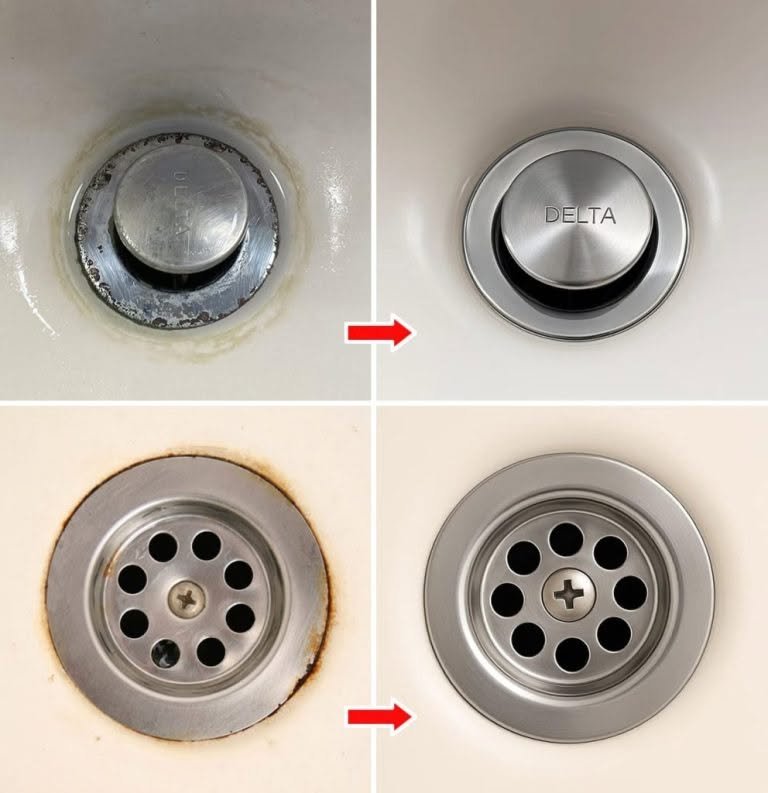
1. Standard Cleaning (Safe for Porcelain, Ceramic, Laminate & Stainless Steel)
-
Make a vinegar compress: Soak a paper towel or cotton pads in distilled white vinegar and wrap them tightly around the base of the faucet.
-
Let it sit: Leave the compress on for 15 to 30 minutes to soften crusty mineral scale. (Do not leave vinegar on brass, gold, or oil-rubbed bronze finishes for more than a few minutes, as it can strip the coating.)
-
Scrub the crevice: Remove the towel and scrub the tight seam around the base with an old soft-bristled toothbrush. For stubborn gunk wedged under the edge, gently run a wooden toothpick or a piece of waxed dental floss around the perimeter.
-
Target dark mildew stains: If a black shadow remains in the rubber gasket or caulk, apply a paste of baking soda and hydrogen peroxide (or a dab of bleach gel on white porcelain), let it sit for 10 minutes, scrub, and rinse thoroughly.
-
Rinse and dry: Wipe everything down with warm water and dry the base with a microfiber cloth to prevent new water spots.
2. Stone-Safe Method (Marble, Granite, Quartz, or Travertine)
-
Mix a gentle paste: Combine baking soda and warm water (or a few drops of pH-neutral dish soap) into a thick paste.
-
Apply and wait: Spread the paste around the faucet base and let it sit for 10 to 15 minutes to lift grime without etching the stone.
-
Agitate gently: Scrub with a soft nylon brush or toothbrush, using a toothpick to clear debris from the seam.
-
Rinse completely: Wipe away all residue with a damp cloth and buff dry.
When Cleaning Isn’t Enough
-
Peeling or black silicone caulk: Once mold grows underneath clear or white silicone sealant, surface scrubbing won’t remove the dark ring. Scrape out the old caulk with a plastic razor blade, clean and dry the area with rubbing alcohol, and apply a fresh bead of 100% silicone kitchen & bath caulk.
-
Corroded metal trim: If the dark ring is pitted or flaking metal from a worn-out baseplate (escutcheon), the finish has corroded through and the trim ring or rubber gasket will need to be replaced.