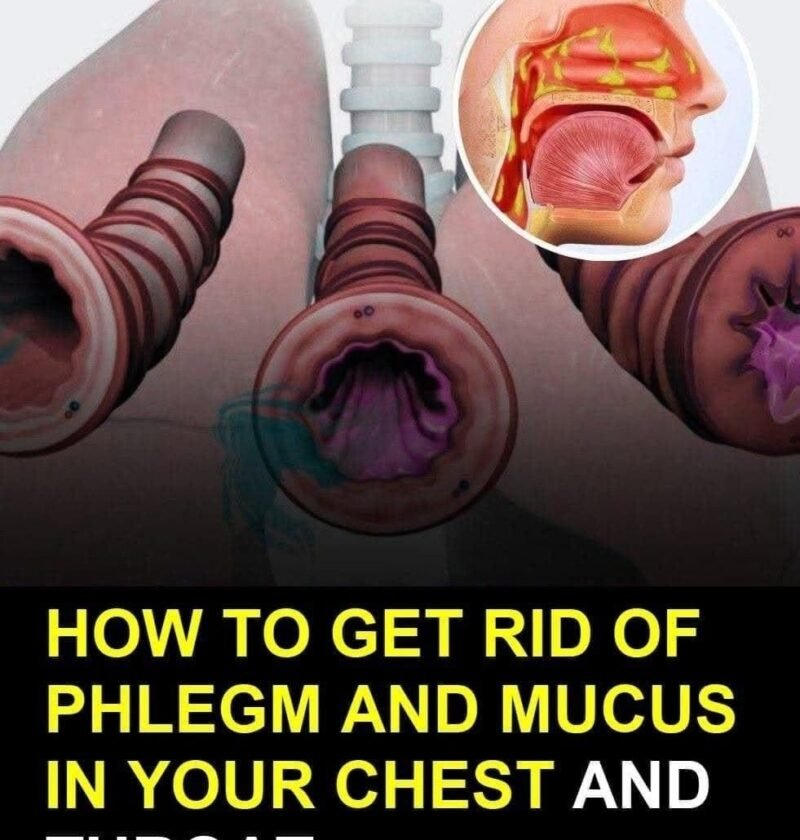
How to Get Rid of Phlegm and Mucus in Your Chest and Throat Naturally
Phlegm is mucus produced in your airways. It often increases with a cold, flu, allergies, sinus drainage, smoking, or other respiratory conditions.
The good news is that simple home remedies can help loosen mucus, soothe your throat, and make coughing it up easier. The right approach depends on what’s causing it.
7 natural ways to relieve phlegm
Water and warm drinks help keep mucus from becoming too thick, making it easier to clear from your throat and chest. If you have been told to restrict fluids because of heart or kidney disease, follow your clinician’s advice.
Mix 1–2 teaspoons of honey into a mug of warm water, with lemon if desired. It may soothe your throat and ease coughing. Never give honey to a child under 12 months.
Dissolve half a teaspoon of salt in a glass of warm water, gargle, and spit it out. This can soothe throat irritation, though it will not clear mucus deep in your lungs.
Moist air may temporarily ease irritation and congestion. Avoid leaning over bowls of boiling water because steam inhalation can cause serious burns.
An extra pillow may help if mucus drains from your nose into your throat at night. This can be particularly useful if you have postnasal drip.
If your mucus mainly feels stuck in your throat, nasal drainage could be the cause. Saline spray can help clear nasal mucus and congestion.
Cigarette smoke, vaping, and air pollution can irritate your airways and increase coughing. Rest while recovering and avoid smoking or secondhand smoke.
Sources: NHS and MedlinePlus home-care guidance.
When phlegm may signal something more serious
Most mucus associated with a common cold improves within 1–2 weeks, although a cough can last longer. Seek medical advice if symptoms worsen, a fever persists, or your cough lasts more than three weeks.
Get urgent medical attention for difficulty breathing, significant chest pain, or coughing up blood. If you have a persistent cough with fever, night sweats, weight loss, or blood-streaked phlegm, you should also be assessed for conditions such as tuberculosis.
One important question
Where do you feel the mucus most?
2. How long has this been happening?
3. Are you coughing?
Get tailored advice