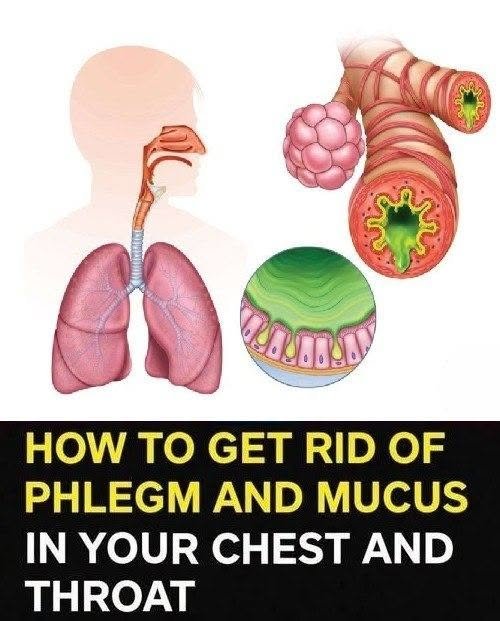
How to Get Rid of Phlegm and Mucus in Your Chest and Throat Naturally
Phlegm is mucus produced by the respiratory tract. It can increase with colds, allergies, postnasal drip, smoking, asthma, or respiratory infections. You usually don’t need to completely “get rid” of mucus—coughing it up is one of the body’s ways of clearing the airways.
1. Drink plenty of fluids
Water and other non-alcoholic fluids can help keep mucus from becoming thick and difficult to cough up. Warm drinks may also temporarily soothe an irritated throat.
2. Try warm honey and water
A warm drink containing 1–2 teaspoons of honey may soothe coughing and throat irritation. Honey isn’t appropriate for children under 1 year old.
3. Use humidified air
A clean cool-mist humidifier can add moisture to dry air and may make irritated airways feel more comfortable. Clean the device regularly to prevent mold and bacterial growth.
4. Use saline for nasal mucus
If your mucus is coming from postnasal drip, a saline nasal spray or rinse can help wash mucus and allergens from the nose. If performing a nasal rinse, use appropriately sterile/distilled water or water that has been boiled and cooled.
5. Don’t smoke
Smoking and exposure to secondhand smoke can increase mucus production and irritate the airways. Avoiding smoke is one of the most useful steps for people who frequently produce phlegm.
6. Keep gently moving
If you’re well enough, light activity can help you breathe more deeply and may make it easier to cough up secretions. Don’t exercise if you’re significantly short of breath or unwell.
When mucus needs medical attention
See a healthcare professional if your cough or phlegm persists for several weeks, repeatedly returns, or is accompanied by fever, wheezing, unexplained weight loss, or worsening breathlessness.
Seek urgent medical attention if you have significant difficulty breathing, chest pain, blue/gray lips, confusion, or cough up more than a small amount of blood.
Important: Green or yellow mucus doesn’t automatically mean you need antibiotics. The color can change during ordinary viral respiratory infections as well.
If you tell me whether your phlegm is clear, white, yellow, green, brown, or bloody and how long you’ve had it, I can explain the more likely causes and what to do next.