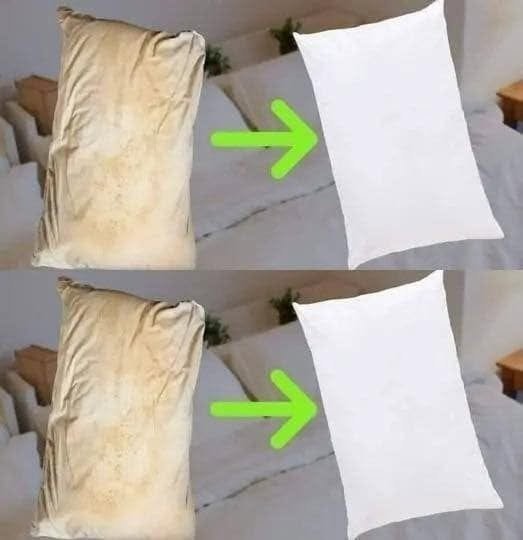
If you’re turning this into a practical home-care post, the safest advice depends on the pillow’s filling and care label. Don’t automatically wash every pillow or use bleach.
How to clean and freshen dirty pillows
- Check the care label first. Some pillows are machine-washable; others, especially certain memory-foam or latex pillows, should not be submerged.
- Wash washable pillows according to the manufacturer’s instructions, preferably using a mild detergent and an appropriate water temperature.
- Rinse thoroughly. Detergent residue can irritate skin and leave the pillow smelling unpleasant.
- Dry completely. This is crucial. A damp pillow can develop mildew and odors. Tumble-dry only if the label permits, or air-dry thoroughly in a well-ventilated area.
- For yellowing: Sweat, body oils, and saliva commonly cause discoloration. A suitable oxygen-based laundry whitener may help on compatible washable fabrics, but follow the product and pillow instructions.
- Freshen between washes: Wash pillowcases regularly and let pillows air out occasionally. A washable protective pillow cover can reduce the buildup of sweat and oils.
- Don’t mask odors with heavy fragrance. A pillow that smells musty after washing may not be completely dry and needs further drying rather than more perfume.
Avoid mixing bleach with vinegar, ammonia, or other cleaning products because dangerous gases can result.
And remember: a pillow doesn’t have to be perfectly white to be clean. If it’s badly stained, has persistent mildew, has damaged filling, or can’t be cleaned according to its care instructions, replacement may be the better option.