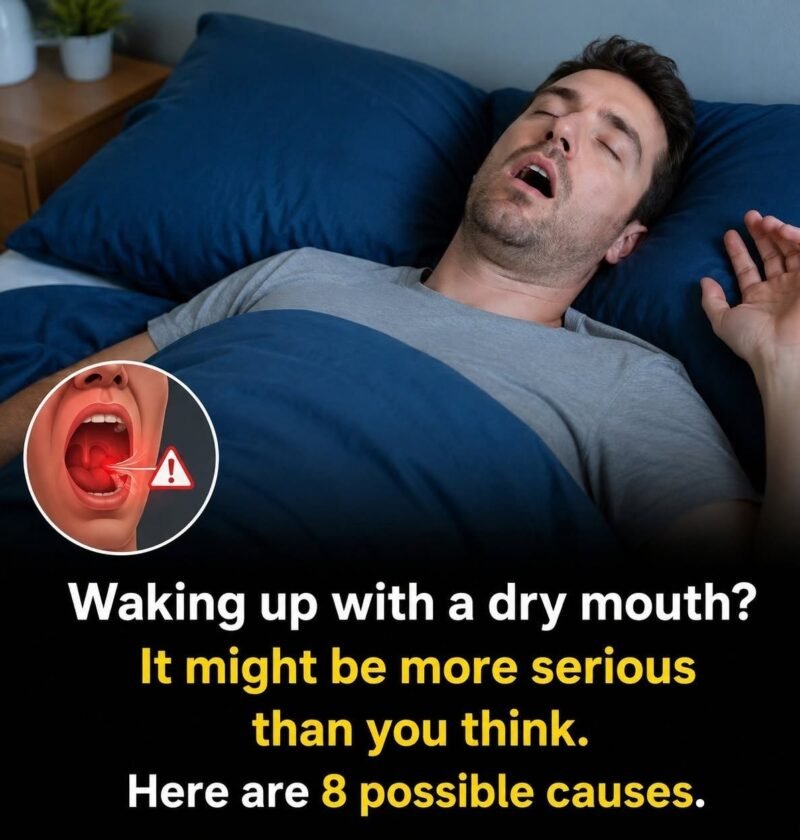
Headlines like *”Dry Mouth at Night: 8 Warning Signs You Shouldn’t Ignore”* use classic clickbait urgency, but waking up with a cotton-dry mouth and throat is a very common discomfort that is definitely worth paying attention to.
Medically known as **xerostomia**, nighttime dry mouth happens because your salivary glands naturally slow down production while you sleep. When combined with other factors, it can leave you feeling parched by morning.
### The 8 Warning Signs & What They Mean
* **1. Waking Up with a Sticky, Burning Sensation:** This is the most classic sign. When saliva flow drops too low, the delicate mucous membranes in your mouth and throat dry out, causing discomfort and a distinct burning feeling.
* **2. Chronic Morning Bad Halitosis (Bad Breath):** Saliva acts as your mouth’s natural rinse cycle, washing away food particles and bacteria. Without it, bacteria multiply rapidly overnight, producing sulfur compounds that lead to severe morning breath.
* **3. Difficulty Swallowing, Speaking, or Tasting:** A lack of moisture makes it genuinely hard to form words, chew, or swallow dry foods comfortably first thing in the morning.
* **4. Cracks at the Corners of the Mouth (Angular Cheilitis):** Severe dryness often causes the skin at the corners of your lips to crack, peel, and become sore or inflamed.
* **5. A Rapid Increase in Tooth Decay or Cavities:** This is a major sign *not* to ignore. Saliva neutralizes acids produced by bacteria and provides essential minerals to protect your enamel. Chronic dry mouth strips away this defense shield, leading to aggressive decay.
* **6. Frequent Sore Throats or Hoarseness:** If you breathe through your mouth all night (due to nasal congestion or sleep apnea), the airflow completely dries out your pharynx, leaving you with a scratchy throat every morning.
* **7. Difficulty Wearing Dentures:** If you have dentures, a dry mouth means you lose the suction and lubrication needed to keep them comfortable, leading to friction and gum irritation.
* **8. Sticky or Grooved Tongue:** A dry tongue can feel rough, look pale or shiny, and develop visible grooves or cracks from lack of moisture.
### Common Culprits Behind Dry Mouth
* **Mouth Breathing:** Sleeping with your mouth open (often caused by allergies, a deviated septum, or sleep apnea) rapidly evaporates the saliva in your mouth.
* **Medications:** Hundreds of common prescription and over-the-counter drugs—especially antihistamines, decongestants, blood pressure medications, and antidepressants—list dry mouth as a primary side effect.
* **Dehydration:** Simply not drinking enough water throughout the day or drinking alcohol close to bedtime can leave you dried out overnight.
### What You Can Do
* **Keep Water Nearby:** A bedside glass of water is the easiest immediate fix for nighttime thirst.
* **Use a Humidifier:** Adding moisture to your bedroom air prevents your nasal passages and throat from drying out, especially if you tend to breathe through your mouth.
* **Review Your Medications:** If you suspect a prescription is causing it, talk to your doctor about adjusting the timing or dosage.
* **Prioritize Oral Hygiene:** Because dry mouth increases cavity risks, be extra diligent with fluoride toothpaste, flossing, and regular dental checkups.
> **When to see a doctor or dentist:** If your dry mouth is persistent, severe, or accompanied by difficulty eating and a sudden rise in dental issues, it’s worth getting evaluated to rule out underlying conditions like Sjögren’s syndrome or salivary gland dysfunction.
Are you dealing with uncomfortable morning dry mouth right now, or did this headline catch your eye?