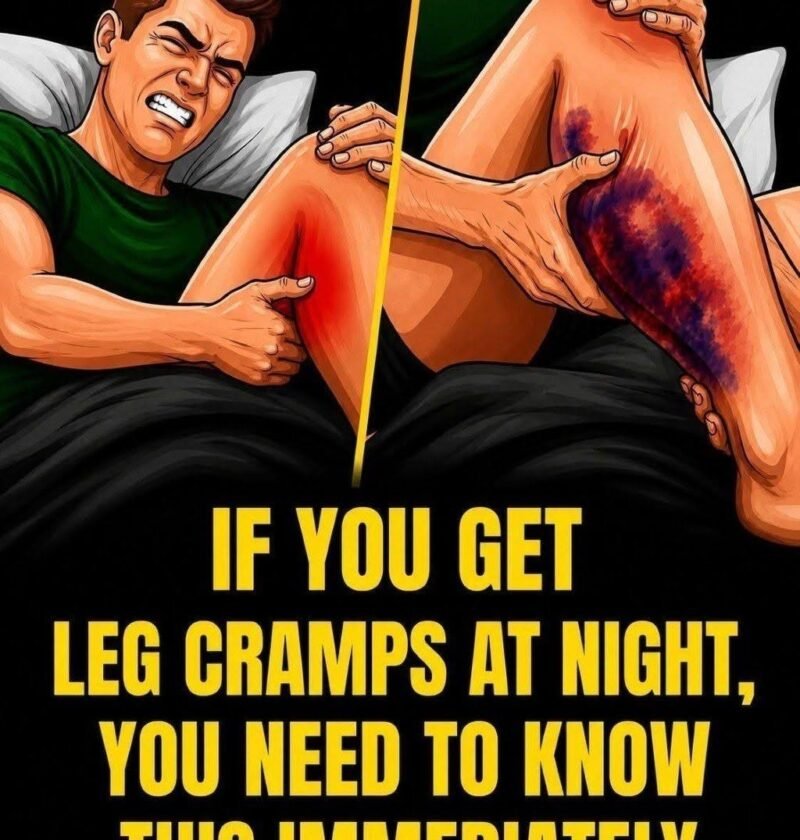
Nighttime leg cramps are common and usually harmless, but recurrent, severe, or new cramps are worth discussing with a healthcare professional.
What can cause them?
Common triggers include:
-
Muscle overuse or prolonged standing
-
Dehydration or heavy sweating
-
Pregnancy or increasing age
-
Certain medications, including some diuretics and statins
-
Low levels of certain electrolytes in some circumstances
-
Reduced blood flow or nerve problems
-
Sometimes, there is no identifiable cause
What to do during a cramp
-
Gently stretch the affected muscle. For a calf cramp, straighten the leg and pull your toes toward you.
-
Massage the cramped muscle.
-
Stand up and put gentle weight on the leg if you can do so safely.
-
Regular calf and hamstring stretching before bed may reduce recurrent cramps for some people.
-
Stay adequately hydrated, particularly after exercise or heavy sweating.
Don’t automatically start potassium, magnesium, or other supplements. Low electrolytes aren’t the cause of every leg cramp, and supplements can be harmful in some people or interact with medications.
When to, causing weakness, or continuing despite self-care, a clinician can review your medications and medical history and get medical attention
Seek prompt medical care if a leg becomes swollen, red, warm, or persistently painful, particularly if the symptoms are mainly in one leg. If leg pain/swelling is accompanied by chest pain or sudden shortness of breath, seek emergency care immediately, as these can be signs of a blood clot.
If cramps are happening frequently, waking you repeatedly, causing weakness, or continuing despite self-care, a clinician can review your medications and medical history and determine whether testing is appropriate.