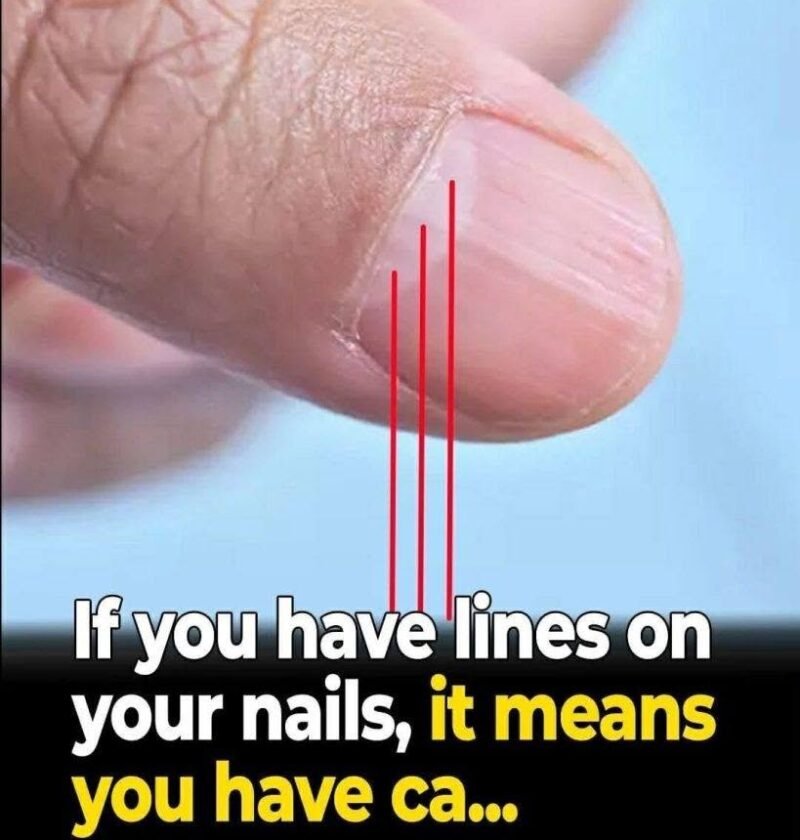
When doctors or longevity researchers talk about a “telltale sign” in your fingernails related to aging and life expectancy, they are usually pointing to the rate of your nail growth—alongside other structural red flags that reflect how well your body is regenerating cells.
1. The Growth Rate Indicator
Longevity experts (such as Harvard geneticist Dr. David Sinclair) note that the speed at which your fingernails grow serves as an everyday window into your body’s metabolic health and cellular regeneration rate.
-
The Mechanism: Nails are made of keratin, a protein produced by rapidly dividing cells. As people age or if systemic health declines, cell turnover and metabolic function slow down. Statistically, nail growth declines by roughly 0.5% per year after age 25, reflecting a lifetime drop of up to 50%.
-
What it means: While it isn’t an exact countdown timer, noticing how frequently you have to trim your nails can offer a rough, intuitive read on your body’s baseline vitality and how efficiently your tissues are repairing themselves.
2. Structural & Visual Red Flags in Nails That Doctors Watch For
Beyond growth speed, physicians check fingernails because they act as a mirror for internal systemic health. Sudden or drastic changes in nail shape, color, and texture can point to underlying conditions that impact long-term health:
-
Nail Clubbing (Bulbous Fingertips): If your fingertips widen and the nails curve sharply downward around the finger like an upside-down spoon, it often indicates chronic low oxygen levels in the blood. Doctors take this very seriously as it can be linked to underlying cardiovascular disease or chronic lung conditions.
-
Terry’s Nails (Mostly White Nails): If the nails turn mostly white with a narrow pink band at the top, it can sometimes be a sign of systemic issues like liver disease, congestive heart failure, or diabetes.
-
Beau’s Lines (Deep Horizontal Grooves): Deep indentations running side-to-side across the nail mean that nail growth was abruptly paused due to severe physical stress, a major illness, uncontrolled diabetes, or circulatory shocks.
-
Splinter Hemorrhages (Tiny Dark Lines): Small reddish-brown vertical lines under the nail that look like splinters can result from minor trauma, but if widespread, they can occasionally signal inflammation of the heart lining (infective endocarditis) or blood vessel damage.
💡 The Bottom Line: While monitoring how fast your nails grow or checking for odd color shifts is an interesting way to stay in tune with your body, a nail change alone is rarely enough to predict life expectancy on its own. However, if you notice dramatic, unexplained shifts in your nail shape (like clubbing), persistent discoloration, or sudden brittleness paired with fatigue, it’s always wise to mention it to a doctor during your routine checkup.