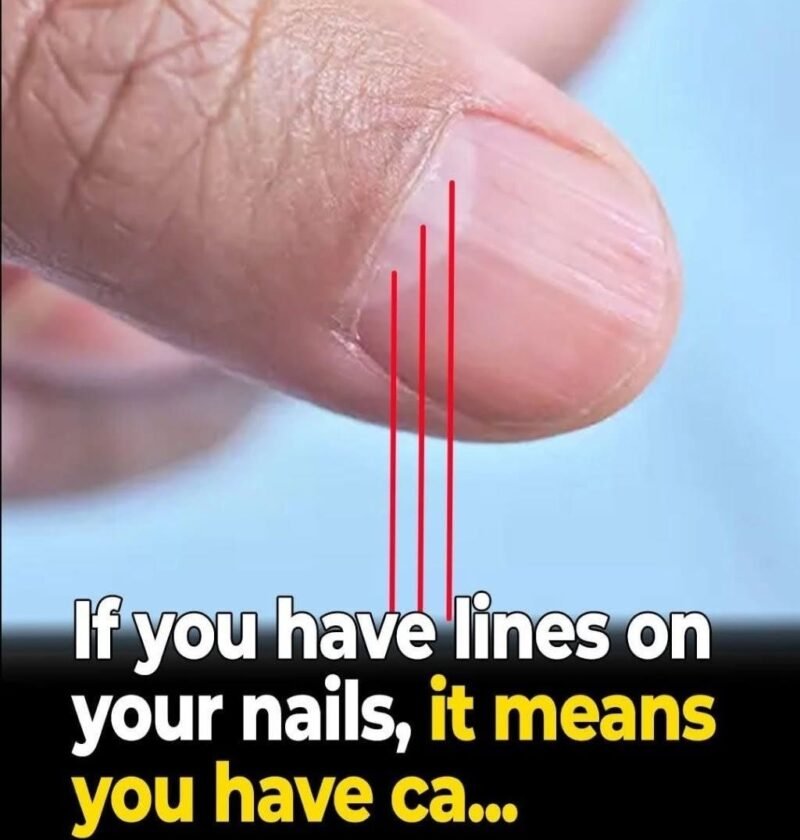
There isn’t a medically validated single fingernail sign that can predict how long someone will live. Headlines claiming that a particular nail feature can tell you your “life expectancy” are misleading.
However, changes in fingernails can sometimes provide clues about health problems:
-
Clubbing — enlarged, rounded fingertips with nails that curve around the fingertip can be associated with certain lung, heart, liver, or gastrointestinal diseases. It needs medical evaluation, but it does not predict lifespan by itself.
-
Pale or spoon-shaped nails — can occur with iron-deficiency anemia and other conditions.
-
Blue or gray nail beds — can indicate inadequate oxygenation or circulation and may require urgent assessment if it develops suddenly.
-
A dark streak in one nail — often has benign causes, but a new or changing dark band should be examined to rule out melanoma.
-
Brittle or ridged nails — are common with aging and can also occur with nutritional deficiencies, thyroid problems, skin conditions, or repeated exposure to water/chemicals.
So, your fingernails aren’t a reliable “life-expectancy test.” If you have a new or rapidly changing nail abnormality, especially a dark streak, nail separation, or clubbing, getting it examined is much more useful than trying to interpret it as a prediction of longevity.