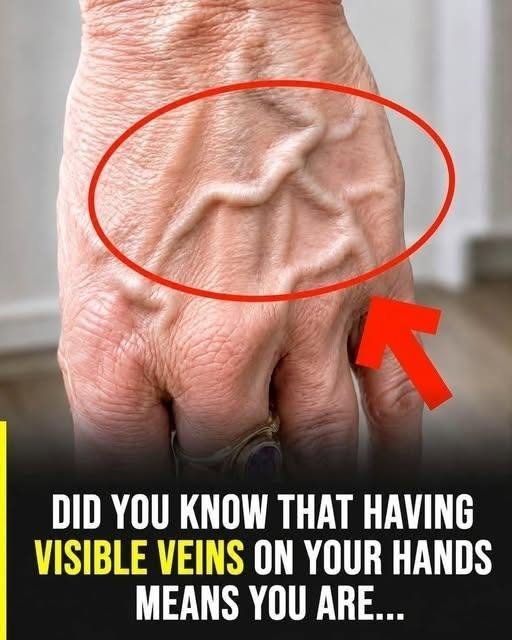
What Visible Veins Actually Mean
-
Low Subcutaneous Body Fat: Veins sit just beneath the skin in a layer of fat. People who are naturally lean, athletic, or lift weights have a thinner fat layer, making normal veins stand out more clearly.
-
Genetics & Skin Tone: Fairer or thinner skin lets the bluish-green tint of deoxygenated blood vessels show through more easily. Some people also naturally inherit veins that sit closer to the surface.
-
Warm Weather or Recent Exercise: Heat and physical exertion cause blood vessels to widen (vasodilation) and increase blood flow to help cool the body, temporarily making veins bulge—especially noticeable in hot climates or after carrying heavy things.
-
Normal Aging: As skin gradually loses collagen and elasticity over time, it becomes thinner, making everyday veins more prominent on the hands, arms, and temples.
-
Dehydration or Temporary Blood Pressure Shifts: Mild dehydration can reduce blood volume slightly and make veins look more pronounced, while straining or standing for long periods pools blood in the lower limbs.
When Visible Veins Do Warrant a Quick Check
-
Varicose veins: Twisted, bulging, rope-like veins (usually in the legs) caused by weakened one-way vein valves—especially if accompanied by aching, heaviness, swelling, or itching.
-
Sudden unilateral swelling or pain: A single swollen, warm, tender, or red leg can be a sign of a blood clot (deep vein thrombosis) and needs prompt medical evaluation.
-
Spider veins with other symptoms: Tiny red or purple web-like clusters are usually just cosmetic, though widespread new clusters on the torso alongside yellowing skin or fatigue should be evaluated by a physician.