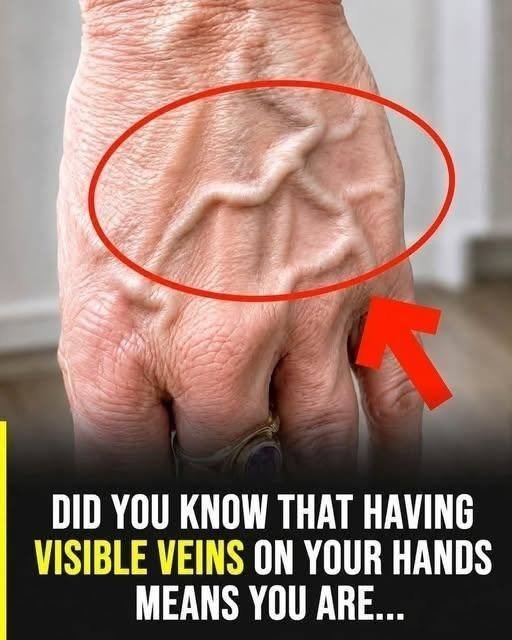
When clickbait headlines use phrasing like “having visible veins means you are…” (often followed by hooks like “super fit,” “aging rapidly,” or uncovering a hidden health risk), they usually oversimplify a very normal biological trait.
In reality, having visible veins doesn’t point to just one single thing. Depending on who you are and where the veins appear, it can mean a few different things:
1. You Have Low Body Fat or High Muscle Mass
If your veins are prominent on your arms, hands, or legs, it is frequently a sign of low subcutaneous body fat combined with good muscle tone. When there is less fat cushioning between your skin and your blood vessels, or when exercise temporarily increases your blood flow and blood pressure, your veins naturally push closer to the surface and stand out.
2. It’s Just Genetics and Skin Tone
-
Fair Skin: People with lighter complexions naturally have veins that show through much more easily because translucent skin offers less pigment to mask them.
-
Family History: Just like eye color or height, the thickness of your skin and the natural pathway of your superficial veins are heavily inherited.
3. Natural Aging or Sun Damage
As people get older, the skin naturally thins and loses collagen and elasticity, while the underlying layer of fat shrinks. This makes veins much more apparent. Years of UV exposure can also break down skin proteins, accelerating this process.
4. When It Might Indicate an Underlying Issue
While most visible veins are completely harmless, prominent or bulging veins (such as varicose veins or spider veins) can sometimes mean that the tiny one-way valves inside your blood vessels have weakened. This causes blood to pool rather than flowing smoothly back to your heart.
When to pay closer attention: If your visible veins are accompanied by physical symptoms like aching, throbbing, heaviness, localized swelling, or skin discoloration in your legs, it’s worth having a doctor or a vascular specialist evaluate your circulation.