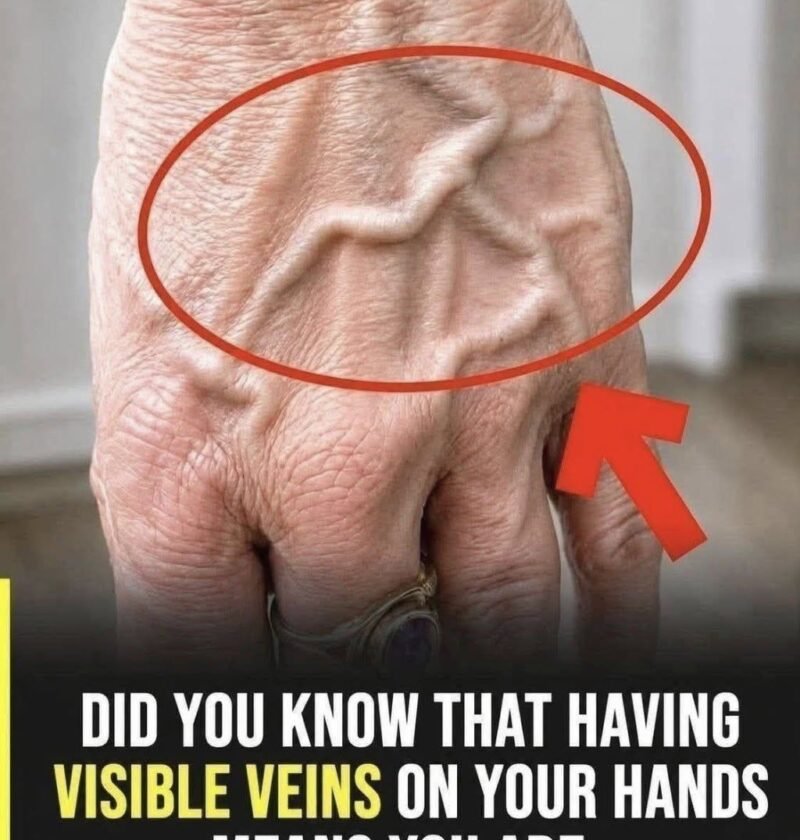
Visible veins: what do they actually mean?
Having visible veins usually isn’t a sign of one specific health condition. Veins can become more noticeable for completely normal reasons, including:
-
Genetics and skin thickness: Some people naturally have more prominent superficial veins.
-
Lower body fat: Less tissue covering the veins makes them easier to see.
-
Exercise: Increased blood flow and muscle expansion can temporarily make veins stand out.
-
Heat: Warm temperatures cause blood vessels near the skin to widen.
-
Aging: Thinning skin can make veins more visible.
-
Dehydration: It can sometimes make veins appear more prominent, although dehydration itself isn’t healthy.
When should you pay attention?
A new or sudden change is more important than simply having visible veins. Seek medical advice if a vein becomes painful, hard, red, warm, or swollen, or if one arm or leg suddenly becomes swollen.
Also seek prompt care for significant swelling accompanied by chest pain or shortness of breath.
Bottom line: Visible veins are often just a normal feature of your anatomy, body composition, activity, or temperature. They don’t by themselves tell you whether you’re healthy or unhealthy.