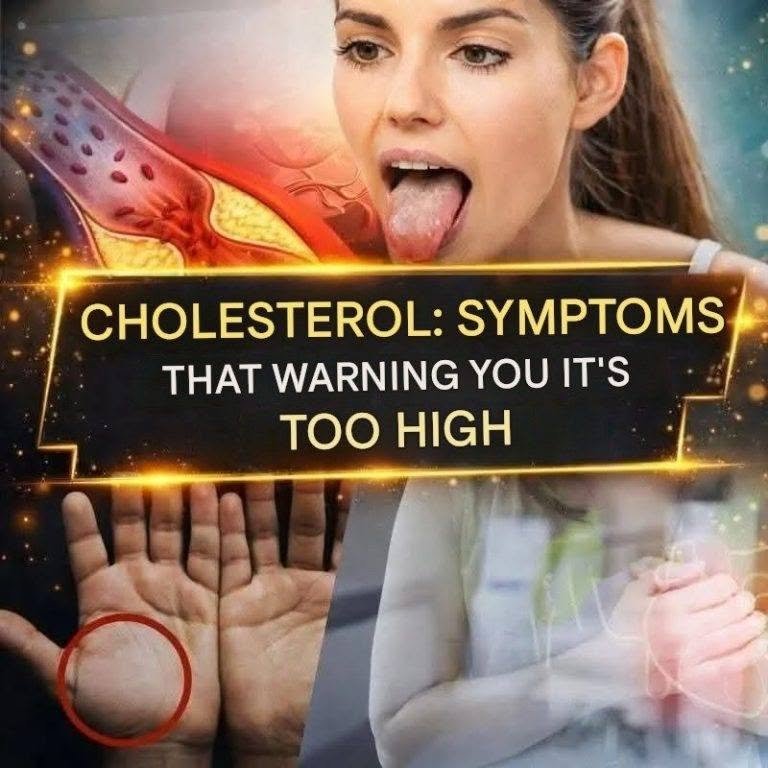
Cholesterol: 5 symptoms that warn you it’s too high
High cholesterol is often called a “silent” condition because it usually causes no noticeable symptoms. The only reliable way to know your cholesterol level is through a blood test called a lipid profile.
5 signs that may be associated with cholesterol complications
Soft, yellowish deposits on or around the eyelids, called xanthelasma, can be associated with abnormal blood lipids. However, they can also occur in people with normal cholesterol.
Cholesterol deposits called xanthomas may appear over tendons, elbows, or knees. They can sometimes indicate inherited high cholesterol.
Called corneal arcus, this ring is common with aging. In younger adults, it can sometimes signal high cholesterol.
Cramping or aching that repeatedly occurs during walking and improves with rest may indicate peripheral artery disease caused by narrowed arteries. High cholesterol is one risk factor.
Pressure, tightness, or pain in the chest can indicate reduced blood flow to the heart due to coronary artery disease. This is a complication, not a direct symptom of high cholesterol itself.
What should you do?
-
Get a lipid profile: It measures total cholesterol, LDL (“bad”) cholesterol, HDL (“good”) cholesterol, and triglycerides.
-
Improve your diet: Eat more vegetables, fruit, oats, beans, lentils, and other fiber-rich foods. Limit trans fats and reduce saturated fats.
-
Stay active: Aim for at least 150 minutes of moderate physical activity per week, if your health permits.
-
Discuss treatment with your doctor: Some people need cholesterol-lowering medication, such as a statin, depending on their cholesterol levels and overall cardiovascular risk.
When to seek emergency help
New or severe chest pain, especially with shortness of breath, sweating, nausea, or pain spreading to the arm or jaw, may be a heart attack. Seek emergency medical care immediately.
Remember: You can have dangerously high cholesterol and feel completely healthy. Don’t wait for symptoms to appear before getting tested.