…another classic symptom-search trap that immediately tries to convince you you’re hours away from a medical catastrophe!
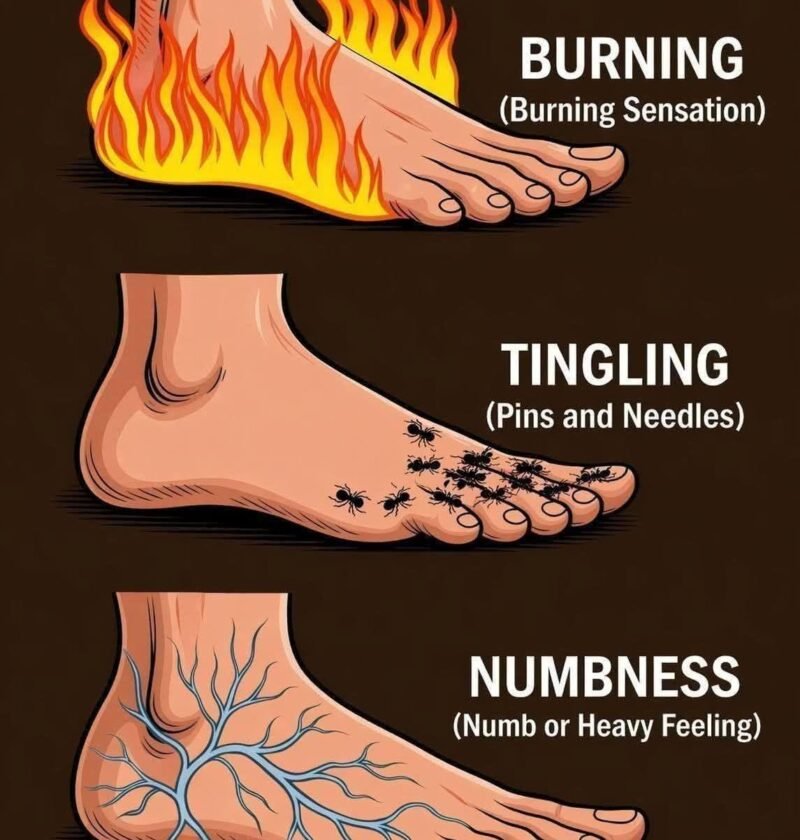
When you type “burning, numbness, and tingling in the feet” into a search engine, the internet loves to immediately spiral into terrifying worst-case scenarios. While these sensations are your body’s way of telling you that something is irritating or disrupting your nerves (a symptom doctors call paresthesia), they don’t automatically mean you’re facing a permanent disability.
Stripping away the alarmist panic, let’s look at what is actually happening when your feet start buzzing, burning, or falling asleep, and when it’s genuinely time to check in with a doctor:
🟢 The Common, Temporary Culprits (Nothing to Panic About)
Most of the time, brief tingling or numbness is completely harmless and clears up on its own:
-
The “Pinched Nerve” (Transient Paresthesia): Crossing your legs for too long, wearing tight shoes, or sleeping in an odd position temporarily compresses the nerves and blood vessels in your feet. Once you shift your position and restore blood flow, that annoying “pins and needles” sensation kicks in as the nerves wake back up.
-
Cold Weather: Extreme cold can temporarily reduce blood circulation to your extremities, leading to mild numbness that resolves as soon as your feet warm back up.
🟡 Chronic Causes Worth Discussing with a Doctor
If the burning, numbness, or tingling is persistent, happens regularly, or gets worse over time, it’s your cue to investigate deeper with a healthcare professional. Common, manageable underlying causes include:
-
Peripheral Neuropathy (often linked to Blood Sugar): Consistently high blood sugar over time can damage the delicate peripheral nerves, typically starting with a “stocking-glove” numbness or burning sensation in the toes and feet.
-
Vitamin Deficiencies: A lack of essential nutrients—particularly Vitamin B12—can impair nerve function and lead to chronic tingling or weakness in the hands and feet. (Very common in vegetarians, vegans, or anyone with absorption issues).
-
Foot and Spinal Compression: Conditions like plantar fasciitis or a pinched nerve in the lower back (like sciatica or a lumbar disc issue) can radiate nerve pain, numbness, and tingling all the way down into the foot.
-
Medication Side Effects: Certain medications (like specific blood pressure drugs or chemotherapy agents) list nerve tingling as a known side effect.
The Bottom Line: If your feet fall asleep because you sat cross-legged too long, shake it off and carry on. But if you are experiencing chronic, unexplained burning or numbness—especially if you manage diabetes or notice spreading weakness—it’s time to skip the internet diagnostic rabbit hole and let a doctor run some simple blood tests or a nerve check.
Did a sudden symptom send you searching online, or did a dramatic health article pop up on your feed?