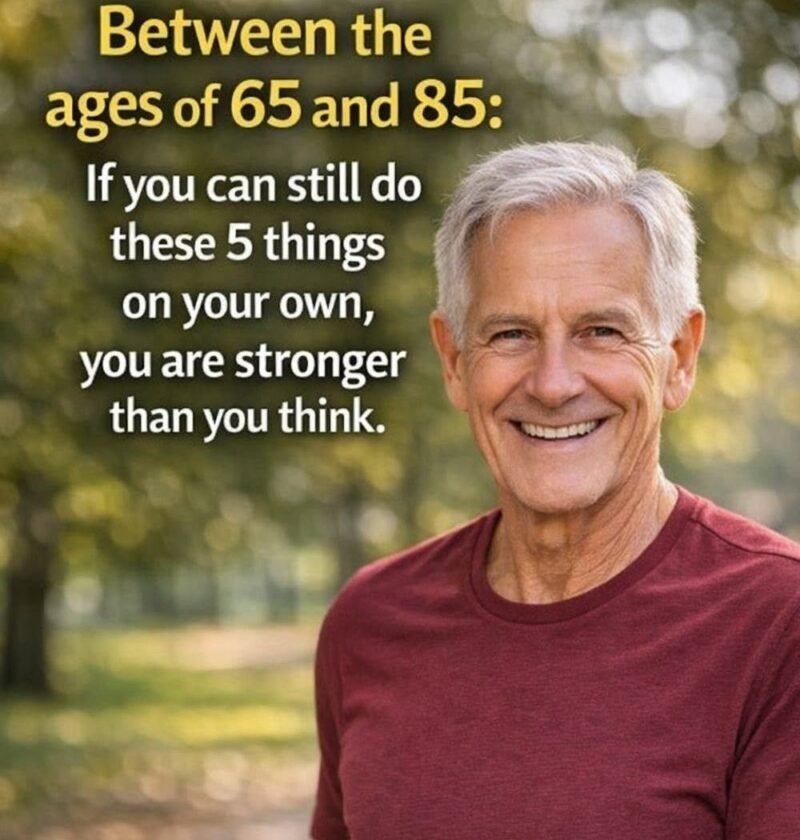
If you’re checking the idea behind this headline, age alone doesn’t determine strength or independence. For adults in their 60s, 70s, and 80s, being able to perform everyday movements safely is a useful sign of physical function.
5 things that are encouraging signs
- Get up from a chair without using your hands
This requires leg and hip strength and is closely related to functional mobility. - Climb a flight of stairs independently
Being able to manage stairs suggests useful lower-body strength, balance, and cardiovascular capacity. - Walk briskly for several minutes without needing to stop
Walking ability is an important indicator of overall physical function. - Carry ordinary household items safely
Carrying groceries or a moderately weighted household object involves grip, arm, leg, and core strength. - Get down to the floor and back up safely
This requires a combination of leg strength, balance, flexibility, and coordination. It shouldn’t be attempted as a test if there’s a significant fall risk.
A better way to think about “strength”
Strength isn’t just how much weight someone can lift. Balance, walking speed, grip strength, leg power, endurance, and the ability to perform daily activities all matter. The CDC recommends regular physical activity that includes muscle-strengthening and balance-related activities for older adults. (cdc.gov)
And don’t turn these into a pass/fail test: someone who can’t perform one of them may still be healthy and active, while someone who can perform all five could still have medical issues.
Most importantly, don’t deliberately challenge yourself with a movement that feels unsafe. If you’re experiencing new weakness, repeated falls, significant dizziness, or a rapid decline in mobility, it’s worth discussing with a healthcare professional.