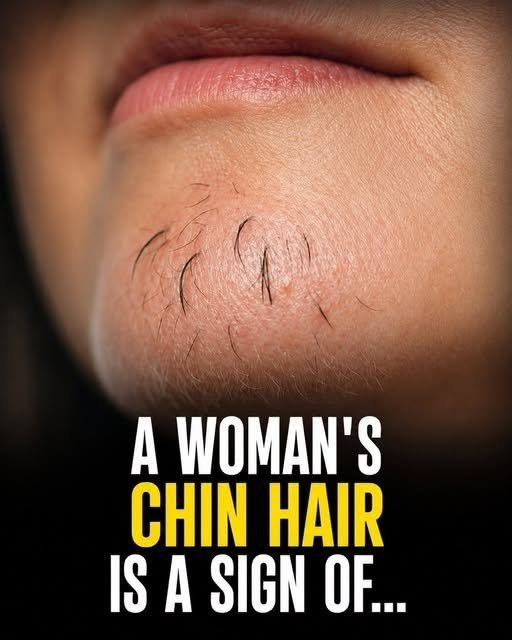
Discovering a stray, coarse dark hair sprouting on your chin can feel like an unwelcome surprise. While it is often dismissed as a frustrating cosmetic nuisance, from a physiological standpoint, facial hair growth in women is a direct messenger from your endocrine system.
While plucking or waxing takes care of the surface, understanding what your body might be signaling beneath the skin can provide valuable insights into your overall hormonal balance.
1. The Hormonal Shift: Androgens at Work
At the core of chin hair growth is the delicate balance between female hormones (estrogen and progesterone) and male hormones (androgens like testosterone), which every woman’s body produces in small amounts.
-
The Mechanism: Hair follicles on the chin and jawline are particularly sensitive to androgens. If your androgen levels rise even slightly, or if your skin receptors become more sensitive to them, those fine, dormant vellus hairs are stimulated to transform into thick, dark terminal hairs.
-
Natural Life Transitions: This is why chin hairs frequently make their first appearance or increase during major hormonal shifts, such as perimenopause and menopause, when estrogen levels drop sharply, leaving androgens temporarily unopposed.
2. Polycystic Ovary Syndrome (PCOS)
For younger women or those experiencing other concurrent symptoms, persistent chin and jawline hair growth is one of the classic, hallmark signs of PCOS.
-
What it is: A common hormonal endocrine disorder affecting how the ovaries work, often characterized by insulin resistance, irregular periods, and elevated androgen production.
-
Other Clues: If chin hair is accompanied by adult acne, stubborn weight gain around the midsection, thinning hair on the scalp, or irregular menstrual cycles, it is worth discussing with a gynecologist or endocrinologist.
3. Insulin Resistance and Blood Sugar Balance
Emerging metabolic research shows a strong link between insulin levels and androgen production.
-
The Mechanism: When your body becomes resistant to insulin (often due to diet, stress, or lack of movement), your pancreas pumps out extra insulin to compensate. High levels of insulin can signal the ovaries to produce more androgens, directly stimulating unwanted hair growth.
4. Genetics and Ancestral Traits
Sometimes, biology is simply passing down a family recipe.
-
The Mechanism: Just as some families are genetically predisposed to curly hair or early graying, sensitivity of facial hair follicles to normal, healthy levels of androgens is often inherited. If your mother or grandmother dealt with stray chin hairs as they aged, you are very likely to follow suit.
Gentle Ways to Manage It
While you investigate or balance the root cause, managing chin hair safely prevents skin irritation and ingrown hairs:
-
Precision Tweezing or Threading: Great for stray hairs, provided you sanitize the tweezers and skin to avoid infection.
-
Dermaplaning or Shaving: A quick, painless way to remove surface hair without pulling on the follicle or causing ingrown hairs.
-
Electrolysis or Laser Hair Reduction: For a more permanent solution, electrolysis destroys the hair growth cell via a tiny electrical current and is effective on all hair colors, while laser works best on dark hair against lighter skin.