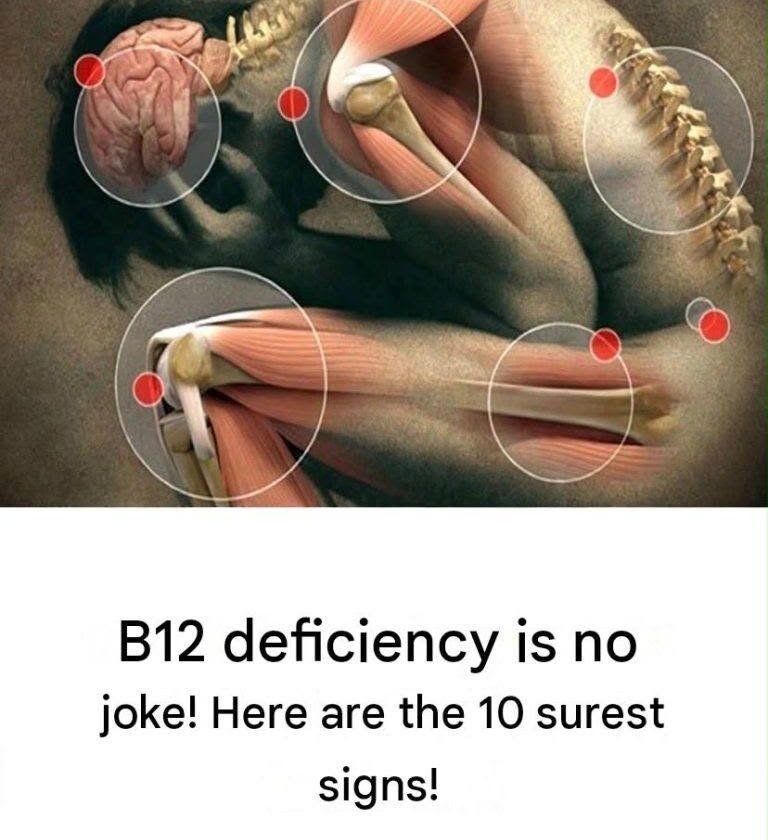
A vitamin B12 deficiency is indeed a serious health concern. Because vitamin B12 is essential for nerve function, red blood cell production, and DNA synthesis, a shortage can impact nearly every system in your body.
Here are 10 surest signs that your body may be lacking adequate vitamin B12:
1. Unexplained Fatigue and Weakness
One of the most common signs of a B12 deficiency is constant, overwhelming exhaustion. Because your body needs B12 to make red blood cells—which carry oxygen throughout your tissues—a lack of it leads to megaloblastic anemia, leaving you feeling chronically weak and drained no matter how much you sleep.
2. Pale or Yellowish Skin (Jaundice)
If you are low on B12, your red blood cells may be fragile and break down easily, releasing excess bilirubin into your body. This can give your skin and the whites of your eyes a slight yellowish tint, or cause a noticeably pale complexion due to a lack of healthy red blood cells.
3. Tingling and Numbness in Hands and Feet (Paresthesia)
Nerve damage is one of the more alarming symptoms of a prolonged B12 deficiency. You might experience a “pins and needles” sensation, burning, or numbness in your extremities. This happens because B12 helps maintain the myelin sheath, the protective coating that shields your nerves.
4. Difficulty Walking and Balance Issues
As nerve damage from a B12 deficiency progresses, it can affect your coordination, mobility, and spatial awareness. You might find yourself feeling unsteady on your feet, tripping more often, or feeling uncharacteristically clumsy.
5. Smooth, Sore, and Red Tongue (Glossitis)
Changes in your mouth can be a direct clue. A person with a B12 deficiency may develop glossitis, where the tongue becomes swollen, red, and painful. Tiny bumps on the tongue (papillae) may also disappear, making the surface look unnaturally smooth. You might also experience mouth ulcers or a burning sensation.
6. Shortness of Breath and Dizziness
Because your blood is struggling to carry enough oxygen to your organs and muscles, you may find yourself getting winded or dizzy from light physical activity, such as climbing a flight of stairs or walking short distances.
7. Cognitive Difficulties (Brain Fog, Memory Loss)
B12 is vital for neurological health. A deficiency can manifest as difficulty concentrating, forgetfulness, or a general feeling of mental cloudiness. In severe or long-term cases, it can even mimic or increase the risk of dementia-like symptoms.
8. Mood Changes, Irritability, or Depression
Low levels of vitamin B12 can take a heavy toll on your emotional well-being. It is closely linked to the production of brain chemicals that affect mood, and a deficiency can lead to heightened irritability, anxiety, mood swings, or symptoms of depression.
9. Vision Disturbances
Though less common, severe B12 deficiency can damage the optic nerve that leads to the eyes. This can result in blurry or disturbed vision, light sensitivity, or in rare cases, shadow vision.
10. Digestive Issues (Nausea, Diarrhea, or Loss of Appetite)
A deficiency can disrupt your gastrointestinal tract, leading to issues like diarrhea, nausea, cramping, or a severe loss of appetite. Over time, these symptoms can contribute to unintended weight loss.
Next Steps:
If you suspect you might be deficient in vitamin B12, a simple routine blood test ordered by your doctor can check your levels. Treatment usually involves dietary changes, high-dose oral supplements, or regular B12 injections, depending on the severity and the underlying cause (such as pernicious anemia or absorption issues).
Are you or someone you know currently experiencing any of these symptoms?