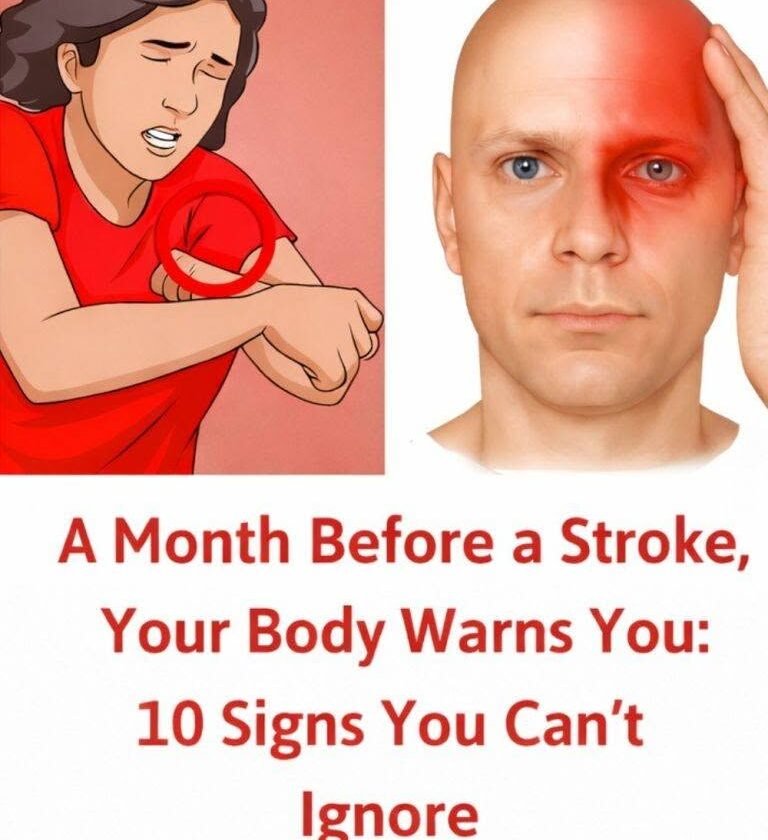
While major strokes often strike with dramatic, sudden violence—like facial drooping or sudden paralysis—research and clinical observations show that the body frequently sends subtle, early warning signals weeks or even a month in advance.
These precursor events are often mini-strokes (Transient Ischemic Attacks or TIAs) or progressive warning signs of cardiovascular and neurological strain. Because they tend to come and go, many people dismiss them as fatigue, aging, or a pinched nerve.
Recognizing these 10 early red flags can provide a critical window to intervene and prevent a major medical emergency.
10 Early Warning Signs to Watch For
1. Transient, Fleeting Weakness or Numbness
-
What it feels like: A sudden, brief heavy feeling, tingling, or weakness in an arm, leg, or one side of the face that lasts only a few minutes before disappearing entirely.
-
Why it happens: A tiny blood clot temporarily blocks a small blood vessel in the brain before dissolving or shifting on its own.
2. Unexplained, Sudden Dizziness or Loss of Balance
-
What it feels like: A sudden spinning sensation (vertigo) or a brief stumble while walking, unconnected to inner-ear issues or dehydration.
-
Why it happens: Reduced blood flow to the cerebellum—the part of the brain responsible for coordination and balance.
3. Sudden, Mild Confusion or “Brain Fog”
-
What it feels like: A sudden, brief episode of struggling to find basic words, forgetting how to perform a routine task, or feeling momentarily disoriented in a familiar place.
-
Why it happens: Temporary oxygen deprivation in language or memory processing centers of the brain.
4. Sudden Visual Disturbances
-
What it feels like: A momentary blurring, doubling, or darkening of vision in one or both eyes, or a brief “shadow” passing across your field of view.
-
Why it happens: Disruptions in the optic pathways or blood supply to the visual cortex.
5. Sudden, Unexplained “Thunderclap” Headaches
-
What it feels like: A severe, blinding headache that hits with absolute maximum intensity out of nowhere, unlike any tension headache or migraine you’ve experienced before.
-
Why it happens: Often linked to sudden changes in intracranial blood pressure or a small arterial tear or leak.
6. Brief Episodes of Slurred Speech
-
What it feels like: A minute or two where your tongue feels thick, your words come out jumbled, or people ask you to repeat yourself because you aren’t articulating clearly.
-
Why it happens: Transient impairment of the motor control centers governing speech muscles (Broca’s area).
7. Unaccustomed Fatigue and Lethargy
-
What it feelsLike: An overwhelming, heavy exhaustion that cannot be explained by poor sleep or physical exertion, often settling in weeks before a cardiovascular event.
-
Why it happens: The heart and circulatory system are working significantly harder to maintain adequate blood flow and oxygenation.
8. Subtle Facial Asymmetry or Spasms
-
What it feels like: A brief twitch, a heavy eyelid, or one side of the mouth feeling slightly stiff or unresponsive when smiling in the mirror.
-
Why it happens: Minor, localized nerve irritation or micro-ischemia affecting cranial nerves.
9. Unexplained Difficulty Swallowing (Dysphagia)
-
What it feels like: A sudden sensation of food getting stuck in your throat or choking slightly on your own saliva during a meal.
-
Why it happens: Early neurological impact on the brainstem pathways that coordinate swallowing muscles.
10. A Vague Sense of Unease or “Impending Doom”
-
What it feels like: A persistent, inexplicable feeling of anxiety, restlessness, or a gut-level feeling that something is physically wrong with your body.
-
Why it happens: While psychological, the body’s autonomic nervous system often reacts to subtle physiological distress and oxygen fluctuations long before conscious symptoms register.
Why You Should Never “Wait and See”
If you or a loved one experience any of these fleeting symptoms, do not assume they are harmless just because they went away. A TIA or early warning sign is a flashing red light from your cardiovascular system. Seeking immediate medical evaluation allows doctors to run diagnostic imaging (like a CT scan or MRI) and cardiovascular checks (like checking carotid artery blockage or blood pressure) to prevent a full-scale stroke before it happens.