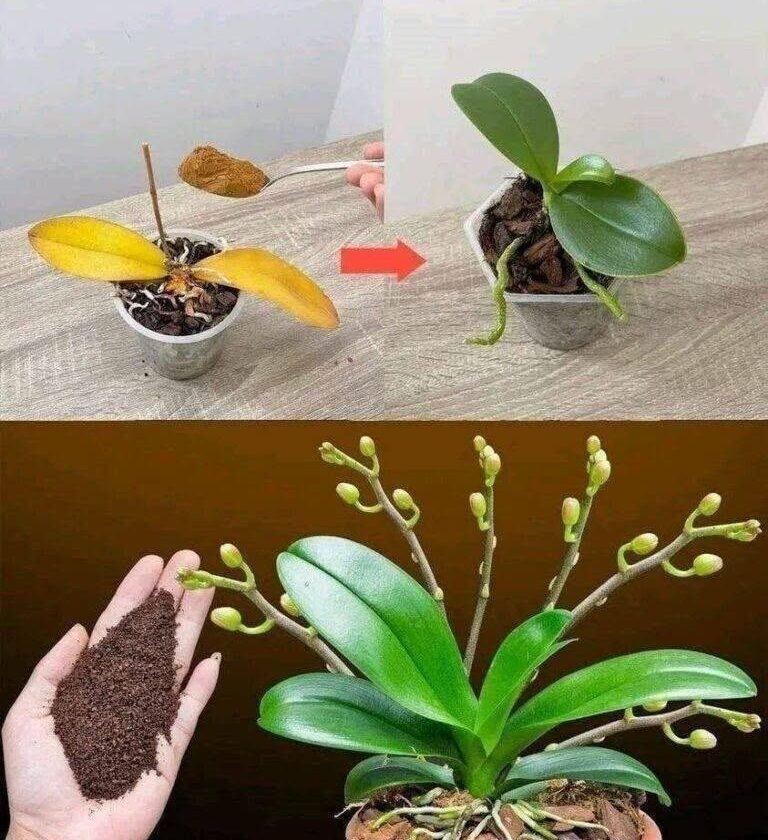
🌸 Just a Teaspoon—and Your Orchid Bursts Into Bloom? Here’s the Truth
You may have seen viral gardening posts claiming that one teaspoon of a kitchen ingredient can make an orchid suddenly produce masses of flowers. Unfortunately, there is no magic teaspoon that guarantees dramatic blooming.
If your orchid is healthy but refusing to flower, focus on the conditions that actually influence blooming.
1. Give it bright, indirect light ☀️
Insufficient light is one of the most common reasons orchids produce leaves but few flowers. Place a Phalaenopsis orchid somewhere with plenty of bright, filtered light, while protecting it from harsh midday sun.
2. Don’t overwater 💧
Water when the growing medium is approaching dryness, then allow excess water to drain completely. Constantly wet roots can lead to root rot.
Avoid leaving water sitting in the crown—the area where the leaves meet.
3. Use orchid fertilizer correctly 🌱
A balanced orchid fertilizer can provide nutrients needed for healthy growth and flowering. Follow the product’s dilution and application instructions rather than adding concentrated fertilizer or homemade mixtures.
More fertilizer does not mean more flowers.
4. Give it suitable temperatures
For many Phalaenopsis orchids, a modest difference between daytime and nighttime temperatures can help encourage flowering. Avoid extreme temperature changes and cold drafts.
5. Check the roots and potting medium
Healthy roots are essential. If the potting medium has broken down, stays wet for too long, or the roots are mushy and brown, the plant may need repotting.
What about the “one teaspoon” trick?
Claims involving sugar, baking soda, rice water, cinnamon, coffee, or other household ingredients are often exaggerated. Some may have limited uses in particular circumstances, but none is a scientifically established shortcut that makes an orchid suddenly produce abundant flowers.
The real secret is consistency: adequate light, correct watering, healthy roots, suitable temperature, and appropriate nutrition.
If you tell me what type of orchid you have or send a photo, I can suggest the best routine to encourage flowering.