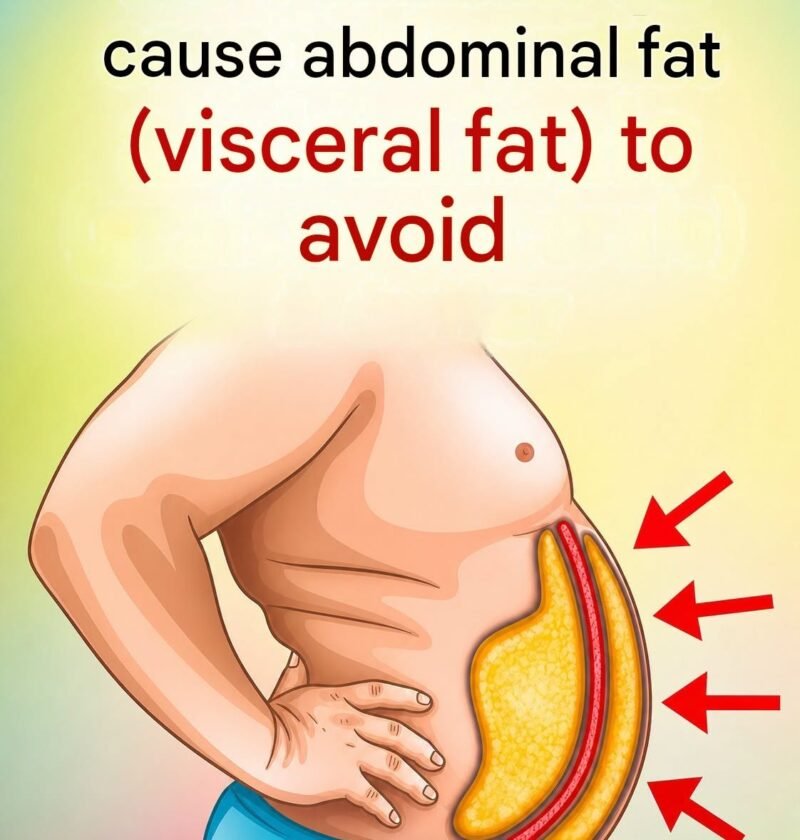
6 Foods Often Linked With More Belly/Visceral Fat
A food doesn’t automatically “cause” visceral fat, and you don’t need to completely ban these foods. Excess calorie intake over time, along with genetics, activity, sleep, and other factors, plays a major role in abdominal fat.
The foods most worth limiting are:
Sugary drinks 🥤
Soda, sweetened tea, energy drinks, and other beverages with added sugar can add substantial calories without making you feel very full.
Sweets and pastries 🍩
Cakes, cookies, donuts, and similar foods often combine refined carbohydrates, added sugar, and fat, making them easy to overconsume.
Highly processed snack foods
Chips, packaged crackers, and similar snacks can be calorie-dense and easy to eat in large quantities.
Processed meats 🌭
Sausages, bacon, hot dogs, and other processed meats are best eaten sparingly. They’re also associated with increased risk of several chronic diseases.
Refined-grain foods in large portions 🍞
White bread, many sweetened cereals, and refined-flour products can contribute to excess calorie intake, especially when portions are large and fiber is low.
Fast food and heavily fried foods 🍟
Fried chicken, fries, burgers, and similar meals can contain a lot of calories, saturated fat, and sodium in relatively small portions.
What helps reduce visceral fat?
Rather than searching for one “fat-burning” food, focus on a sustainable pattern: vegetables, fruit, beans/lentils, whole grains, nuts, fish or other lean proteins, and minimally processed foods, while reducing excess calories and added sugars.
Regular walking plus resistance training can also help reduce abdominal fat and improve metabolic health.
And importantly, you can’t selectively burn visceral fat from your stomach by avoiding one particular food. Overall lifestyle and energy balance matter much more.