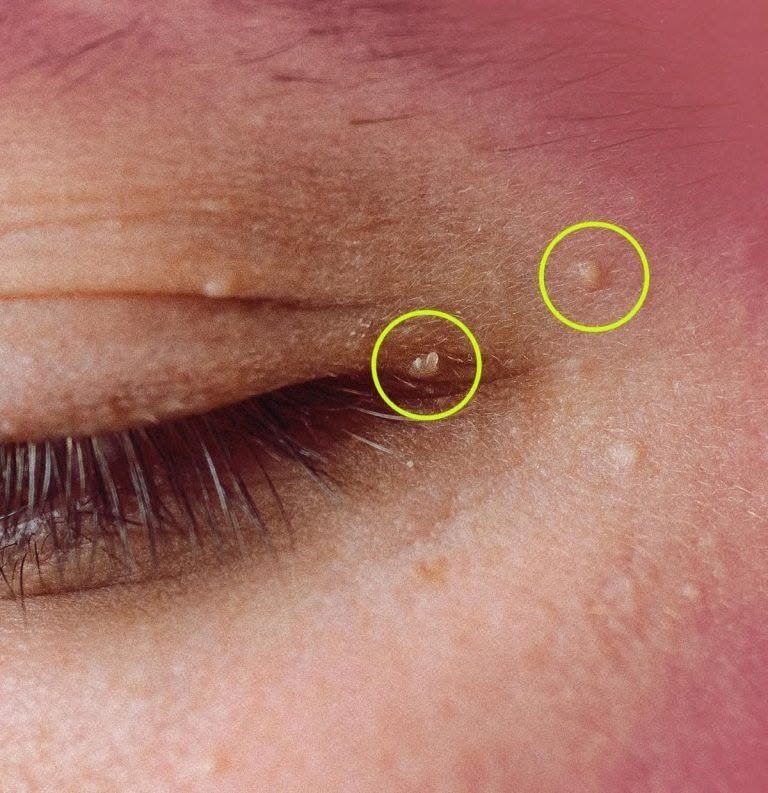
If by “fat cysts” you mean milia, they aren’t actually fat deposits. They’re tiny, firm keratin-filled cysts that commonly appear as white or skin-colored bumps, especially around the eyes and cheeks.
How to Get Rid of Milia Safely
Don’t squeeze or pop them. Unlike a typical pimple, milia don’t have an opening that can simply be squeezed out. Picking can cause irritation, scarring, or infection.
Use gentle skincare. A mild cleanser and non-comedogenic moisturizer are a good starting point.
Consider a retinoid. Topical retinoids can help some types of milia by encouraging skin-cell turnover. If you’re considering one, ask a dermatologist or pharmacist which product and strength are appropriate for you.
Avoid aggressive scrubs. Abrasive exfoliation can damage the surrounding skin without necessarily removing the cyst.
Professional removal works quickly. A dermatologist can carefully open and remove the milia using sterile instruments. This is particularly appropriate for stubborn or numerous lesions.
Review heavy skincare products. Thick creams or ointments may contribute to milia in some people, although milia can also occur without any obvious trigger.
👁️ Be especially careful around the eyes
Because milia frequently occur near the eyelids, don’t try to puncture them yourself. The skin is delicate and an accidental injury can be serious.
If a bump changes rapidly, becomes painful, bleeds, grows, or you’re not sure it’s actually milia, have it examined rather than treating it at home.