🌱 “Never Uproot This Plant!” — What’s Really Going On?
Why some “weeds” are worth keeping
Many plants that people casually call weeds can have legitimate ecological or practical value:
- Dandelions can provide food for pollinators and are edible when correctly identified and harvested from an uncontaminated area.
- Purslane is an edible plant containing fiber and various nutrients and is sometimes intentionally grown as a vegetable.
- Clover can provide nectar for pollinators and, as a legume, can contribute nitrogen to the soil through its relationship with nitrogen-fixing bacteria.
- Chickweed can provide food for wildlife and is sometimes eaten as a leafy green when correctly identified.
- Plantain weeds can provide habitat and food for insects and may tolerate compacted soils where other plants struggle.
But these benefits don’t mean every one of these plants belongs in every garden.
⚠️ Why you shouldn’t automatically keep a mystery plant
Some plants that look attractive or “medicinal” online can be:
- Invasive, spreading rapidly and displacing desirable plants.
- Toxic, particularly to children, pets, or livestock.
- Irritating, causing skin reactions when handled.
- Misidentified, with dangerous plants sometimes resembling edible species.
- Contaminated by pesticides, herbicides, animal waste, or polluted soil.
Even a genuinely useful plant may become a problem if it spreads aggressively or competes with vegetables and ornamental plants.
🌿 “Natural” doesn’t automatically mean medicinal
A common viral claim is that a garden weed can supposedly “cure inflammation,” “clean the blood,” “kill parasites,” or “treat diabetes.” Those claims need evidence for the specific plant and specific condition. Traditional use or laboratory experiments don’t establish that eating the plant will treat a disease.
Likewise, you shouldn’t make teas, tinctures, or concentrated extracts from an unidentified plant.
What to do when an unfamiliar plant appears
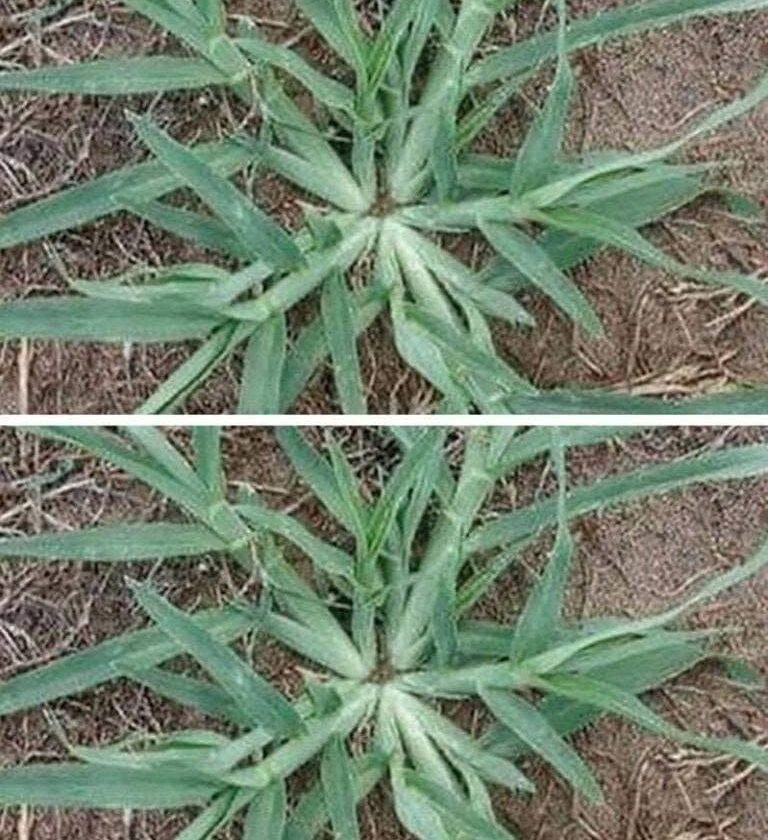
Don’t immediately pull it out—and don’t immediately eat it either.
Instead:
- Take clear photographs of the whole plant.
- Photograph the leaves, stem, flowers, and seed heads.
- Note where it is growing and approximately how tall it is.
- Identify the species using a reliable botanical source or local expert.
- Check whether it is considered invasive or protected in your area.
- Only consider eating it after confident identification and confirmation of edibility.