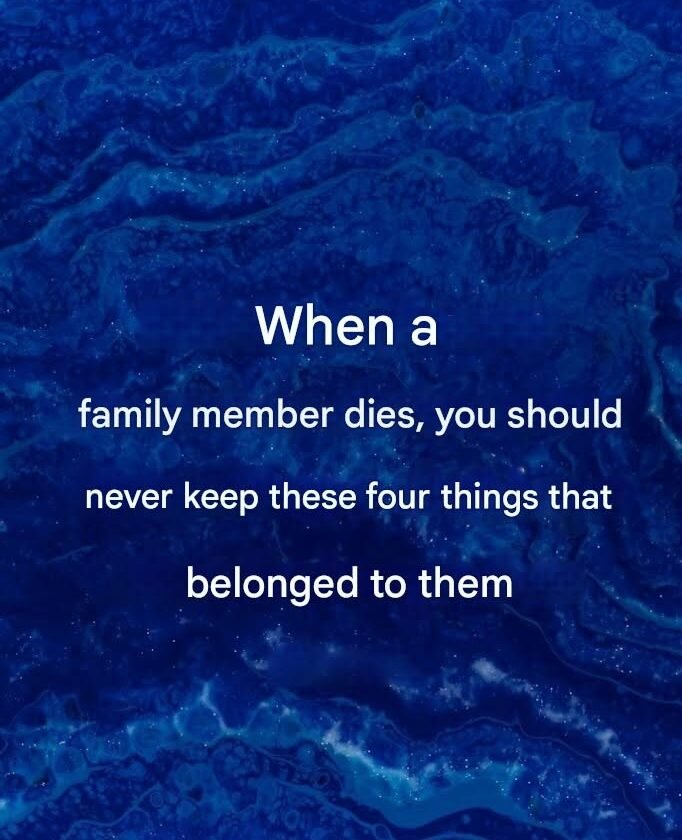
If you’re fact-checking “Do not keep these items that belonged to a deceased person,” be careful with the wording. There is no general medical or scientific rule that certain ordinary belongings become harmful simply because their owner died.
What you may want to dispose of or handle carefully
Prescription medications — don’t take medication that belonged to someone else; dispose of unused medicines through an appropriate medication take-back or disposal service.
Perishable or contaminated items — food, cosmetics, or personal-care products that are expired, spoiled, or contaminated should be discarded.
Potentially infectious materials — items contaminated with blood or other bodily fluids may require appropriate cleaning or disposal.
Important documents and valuables — don’t throw these away before the estate has been properly reviewed. Depending on local law, belongings may form part of the deceased person’s estate.
G
GOV.UK
What about clothes, photographs, jewelry, and furniture?
There is no inherent health or psychological requirement to throw them away. Keeping meaningful belongings can be a normal part of grieving, and bereavement organizations emphasize that there is no universal timetable for deciding what to keep or release.
C
cruse.org.uk
+1
Claims that a deceased person’s clothes, jewelry, bed, or other possessions carry “negative energy,” attract illness, or prevent the deceased from resting are matters of personal or cultural belief, not established medical facts.
Bottom line: Keep what is meaningful and safe, dispose of genuinely hazardous or unusable items appropriately, and don’t feel pressured to throw away treasured possessions simply because someone has died.
G
C
Sources