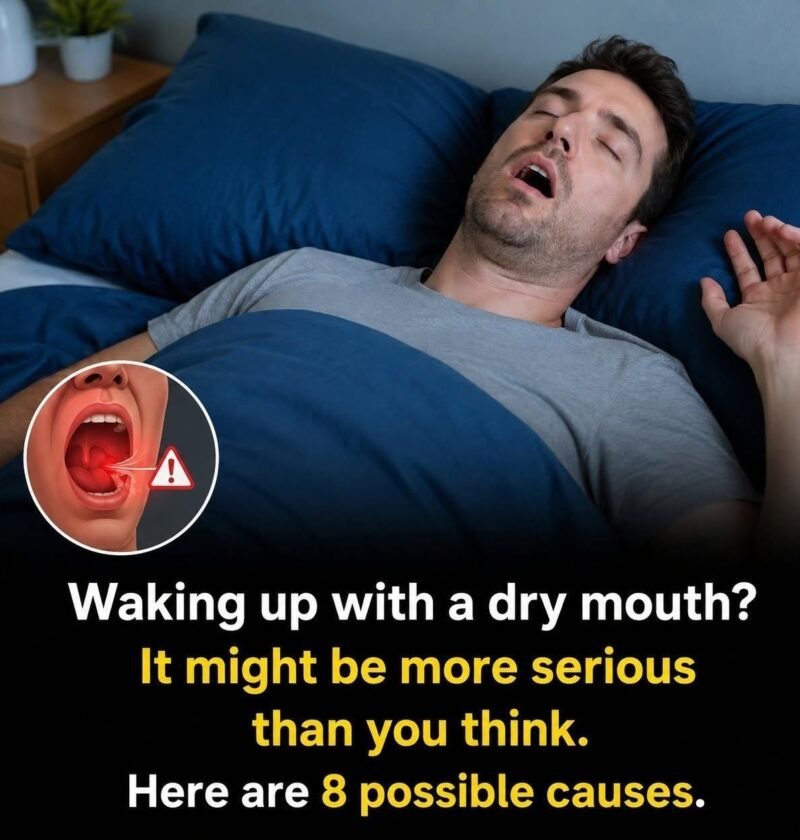
Waking up with a dry mouth at night: what might your body be telling you?
Waking up with a dry mouth doesn’t automatically mean something is wrong. Saliva production naturally decreases during sleep, and breathing through your mouth can make the dryness much more noticeable.
M
Mayo Clinic
+1
Common causes
Mouth breathing or snoring: A blocked nose, sleeping with your mouth open, or snoring can dry the mouth considerably.
M
Mayo Clinic
Sleep apnea: Dry mouth on waking can occur with sleep apnea, especially when accompanied by loud snoring, pauses in breathing, gasping/choking during sleep, morning headaches, or excessive daytime sleepiness.
N
NHLBI, NIH
+1
Medications: Hundreds of medications can reduce saliva, including some antihistamines, decongestants, antidepressants, blood-pressure medicines, pain medicines and bladder-control drugs.
M
Mayo Clinic
+1
Dehydration: Not getting enough fluids can make saliva thicker and the mouth feel dry.
Diabetes: Persistent dry mouth can occur with diabetes, particularly when blood glucose isn’t well controlled.
N
NIDCR
Alcohol and tobacco: Both can worsen dry-mouth symptoms.
M
Mayo Clinic
Certain medical conditions: Sjögren’s disease and some salivary-gland disorders can cause persistent dryness.
N
NIDCR
What you can try tonight
Keep water nearby and take small sips when needed. A humidifier, especially if the bedroom air is dry, may help. If you breathe through your mouth because of nasal congestion, addressing the nasal problem may reduce the dryness. Sugar-free gum or a sugar-free lozenge during the day can stimulate saliva.
N
NIDCR
+1
Good dental care is particularly important because insufficient saliva increases the risk of tooth decay, gum disease and oral infections.
N
NIDCR
When to get it checked
If dry mouth is persistent rather than occasional, speak with a doctor or dentist. Don’t stop prescription medication on your own; a clinician can review your medicines and determine whether one could be responsible.
N
NIDCR
+1
If you also have loud snoring, witnessed pauses in breathing, gasping/choking at night, morning headaches, or significant daytime sleepiness, ask a healthcare professional about possible sleep apnea.
N
NHLBI, NIH
Bottom line: Waking with a dry mouth is usually not a mysterious warning from one particular organ. Mouth breathing, medications, dehydration and sleep apnea are among the important possibilities, and persistent symptoms deserve an explanation.
M
N
N
Sources