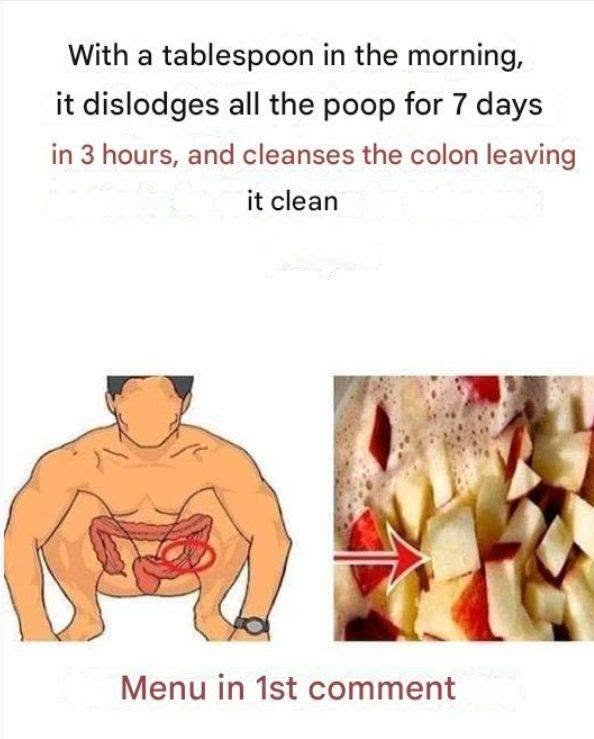
The headline you found is essentially pointing to three evidence-supported lifestyle approaches that can make stools softer and easier to pass. The exact article appears to recommend these rather than a special “detox” or instant remedy.
K
kitchencrave.site
1. Increase dietary fiber gradually
Fiber adds bulk and helps stools retain water, making them easier to evacuate.
Good choices include:
Fruits: kiwi, pears, apples with the skin, oranges, prunes
Vegetables: carrots, spinach, broccoli and other leafy vegetables
Whole grains: oats, whole-wheat bread, brown rice
Legumes: lentils, chickpeas and beans
Nuts and seeds
For adults, a general target is around 22–34 g of fiber per day, depending on age and sex. Increase your intake gradually rather than suddenly, because a rapid increase can cause gas and bloating.
K
kitchencrave.site
Prunes/prune juice can be particularly useful because prunes contain fiber and sorbitol, a naturally occurring substance that can draw water into the bowel.
2. Drink enough fluids
Fiber works better when you are adequately hydrated. If you increase fiber while drinking very little, your stool can sometimes become harder rather than easier to pass.
Water is the simplest option. Your individual fluid requirement depends on factors such as your activity level, climate and medical conditions.
K
kitchencrave.site
A practical approach is to drink regularly throughout the day, rather than trying to consume a very large amount all at once.
3. Move and establish a regular toilet routine
Physical activity can help stimulate bowel movement. Even regular walking can be beneficial.
Another useful habit is to try going to the toilet 15–45 minutes after breakfast. Eating naturally stimulates the colon in many people, so taking advantage of this reflex may make bowel movements easier.
K
kitchencrave.site
Your position can also matter. Putting your feet on a small footstool while sitting on the toilet raises your knees above your hips and can make evacuation easier.
A simple daily routine
For example:
Morning:
Drink some water → eat a fiber-rich breakfast such as oats + fruit → take a short walk → sit on the toilet without excessive straining.
During the day:
Eat vegetables, fruit, whole grains and/or legumes and drink fluids regularly.
Evening:
Take another short walk if possible and maintain a consistent eating and sleeping routine.
Important
These measures don’t necessarily produce an immediate bowel movement. If constipation is severe, persistent, or doesn’t improve with dietary and lifestyle changes, a pharmacist or doctor can advise whether a suitable laxative is appropriate. Avoid taking large quantities of herbal laxatives or suddenly consuming huge amounts of fiber.
K
kitchencrave.site
Seek medical attention promptly if constipation is accompanied by blood in the stool, persistent or severe abdominal pain, vomiting, fever, inability to pass gas, or unexplained weight loss.
K
kitchencrave.site
If you tell me your age, how many days you’ve been constipated, whether the stool is hard, and whether you have abdominal pain or bleeding, I can suggest a practical food-and-routine plan for the next 24–48 hours.
K
Sources