New Method: Colonoscopy Will No Longer Be an Invasive Examination” — What’s Actually Happening?
There are newer, less-invasive ways to screen the colon, but the claim that colonoscopy itself has become noninvasive is misleading.
🔬 One important alternative: virtual colonoscopy
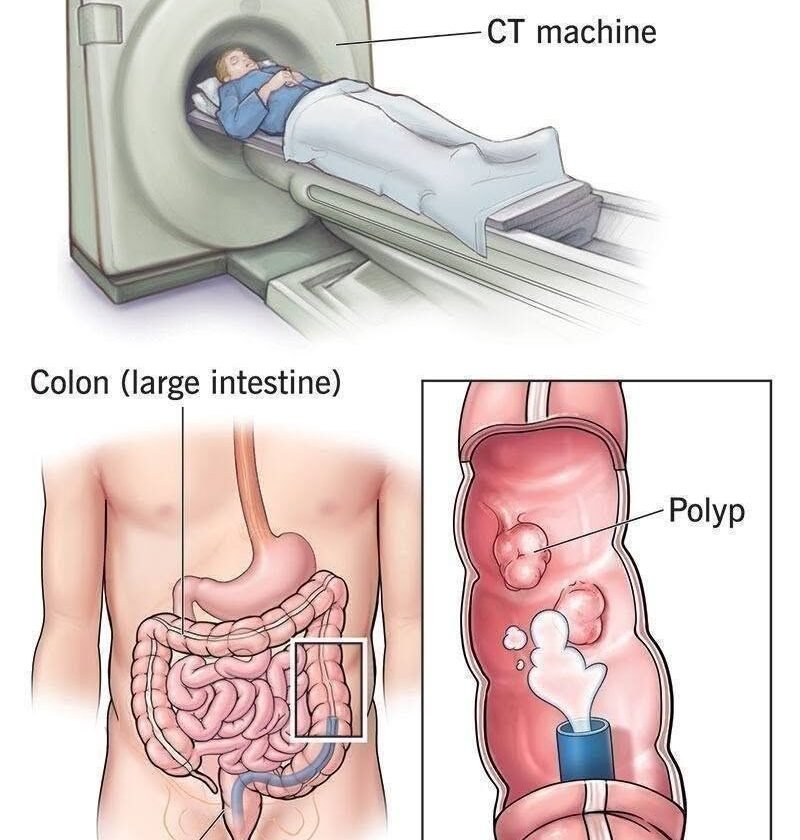
CT colonography, sometimes called a virtual colonoscopy, uses CT imaging to create detailed pictures of the colon without inserting a traditional colonoscope through the entire colon. It is considerably less invasive than conventional colonoscopy.
However, it still generally requires bowel cleansing, and air or carbon dioxide is introduced into the colon through a small rectal tube. If a suspicious polyp is found, you’ll usually still need a conventional colonoscopy to remove it or obtain tissue.
🧪 Other options don’t involve a scope
For average-risk adults, screening can also include:
- FIT stool testing — typically performed annually
- Stool DNA-FIT testing — at recommended intervals
- CT colonography — commonly every 5 years
- Colonoscopy — commonly every 10 years when appropriate
Current U.S. recommendations include several of these options for colorectal cancer screening rather than requiring everyone to undergo colonoscopy.
⚠️ But these tests aren’t interchangeable
A major advantage of traditional colonoscopy is that the doctor can see a suspicious lesion, take a biopsy, and remove many polyps during the same procedure. Noninvasive or minimally invasive screening tests generally cannot do that.
For example, if a stool test or virtual colonoscopy produces an abnormal result, a conventional colonoscopy may still be necessary.