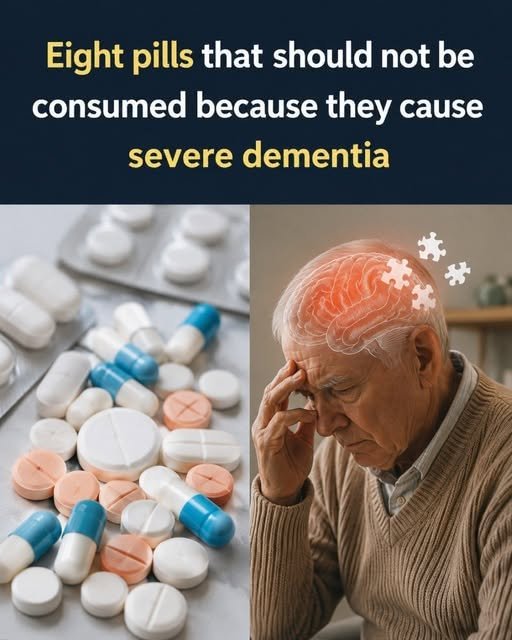
If you’re checking the accuracy of this headline, there is a real issue behind it, but “8 types of drugs linked to increased dementia risk” is too broad without context. Much of the evidence comes from observational studies, which can show an association without proving that a medication causes dementia. A 2025 umbrella review found the strongest evidence for increased dementia risk with anticholinergic medications, while evidence for several other drug classes was much less certain.
P
PubMed
+1
Drug classes that deserve attention
Anticholinergic drugs — used for conditions including overactive bladder, allergies, depression, and some gastrointestinal problems. Higher cumulative exposure has been associated with cognitive decline and dementia, particularly in older adults.
A
American Geriatrics Society
+1
Benzodiazepines — medicines such as diazepam and lorazepam can cause sedation and cognitive impairment; observational studies have reported associations with dementia, although causality remains uncertain.
P
PubMed Central (PMC)
“Z-drug” sleeping medicines — such as zolpidem and related hypnotics have been investigated for possible dementia associations, but the evidence isn’t strong enough to say they cause dementia.
Opioid pain medicines — can impair alertness and cognition, particularly in older adults. They’re also listed among medications requiring caution in geriatric prescribing.
A
American Geriatrics Society
Certain anticonvulsants — some observational studies have found associations with dementia, but the underlying neurological conditions themselves can complicate interpretation.
P
PubMed Central (PMC)
Some proton-pump inhibitors (PPIs) — observational research has produced mixed findings; an association should not be interpreted as proof that PPIs cause dementia.
P
PubMed Central (PMC)
Some hormone-related therapies — dementia associations vary substantially by drug, indication, age and timing of treatment, so this category cannot simply be labeled “dementia-causing.”
P
PubMed Central (PMC)
Other medications identified in large observational studies — including certain drugs for gastrointestinal symptoms, nausea/vertigo and genitourinary conditions. These findings are particularly vulnerable to confounding because the underlying illnesses may themselves affect dementia risk.
P
PubMed Central (PMC)
The important distinction
Do not stop a prescription because of a dementia headline. Some medicines on these lists provide major benefits, and untreated conditions such as high blood pressure can themselves increase dementia risk. In fact, a recent systematic umbrella review found moderate-certainty evidence that antihypertensives and statins are associated with reduced dementia risk, while anticholinergics were the drug category with moderate-certainty evidence of increased risk.
P
PubMed
For someone taking several medications—particularly an older adult—the useful step is a medication review with a doctor or pharmacist. The goal is to identify unnecessary drugs, reduce anticholinergic burden where appropriate, and find safer alternatives rather than abruptly stopping treatment. The American Geriatrics Society specifically recommends individualized medication review for older adults.
A
American Geriatrics Society
So a more medically responsible headline would be:
“8 Medication Groups Researchers Have Studied for Possible Dementia Risk—and What the Evidence Really Shows”
P
A
P
Sources