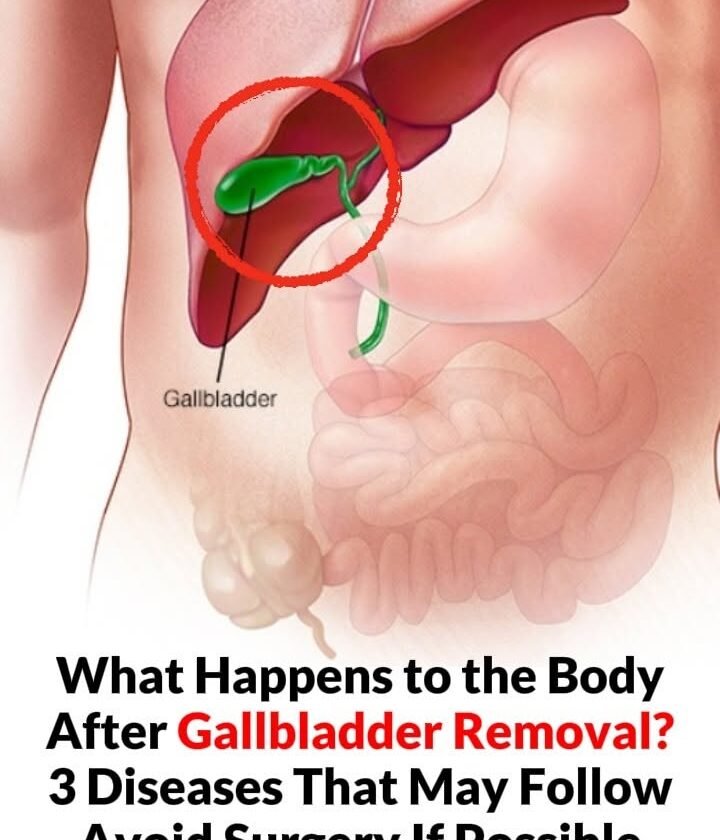
That headline is misleading and potentially dangerous, particularly the advice to “avoid surgery if possible.”
What actually happens after gallbladder removal?
The gallbladder stores bile made by the liver. After it is removed, the liver continues producing bile, but the bile flows directly into the small intestine instead of being stored in the gallbladder. Most people can live normally without a gallbladder.
N
NIDDK
+1
Some people experience temporary or persistent symptoms afterward, including:
Diarrhea or softer, more frequent stools
Bloating or indigestion
Abdominal discomfort
Nausea
These symptoms are sometimes referred to as post-cholecystectomy syndrome, and persistent symptoms can be evaluated and treated.
N
nhs.uk
What about the “3 diseases”?
There isn’t a medically established list of three diseases that routinely follow gallbladder removal. Surgery does carry risks—including infection, bleeding, bile leakage, bile-duct injury, and blood clots—but serious complications are uncommon.
N
nhs.uk
More importantly, avoiding a recommended cholecystectomy isn’t automatically safer. Symptomatic or complicated gallstones can cause inflammation of the gallbladder, bile-duct infection, jaundice, or gallstone pancreatitis. In these situations, surgery may prevent serious complications.
N
NIDDK
+1
For people with silent gallstones that aren’t causing symptoms, treatment often isn’t necessary. But if gallstones are causing repeated attacks or complications, the appropriate decision should be made with a clinician based on the individual’s situation.
N
NIDDK
A much more accurate headline would be:
“What Really Happens After Gallbladder Removal? Common Changes, Risks, and When Surgery Is Recommended.”
N
N
Sources