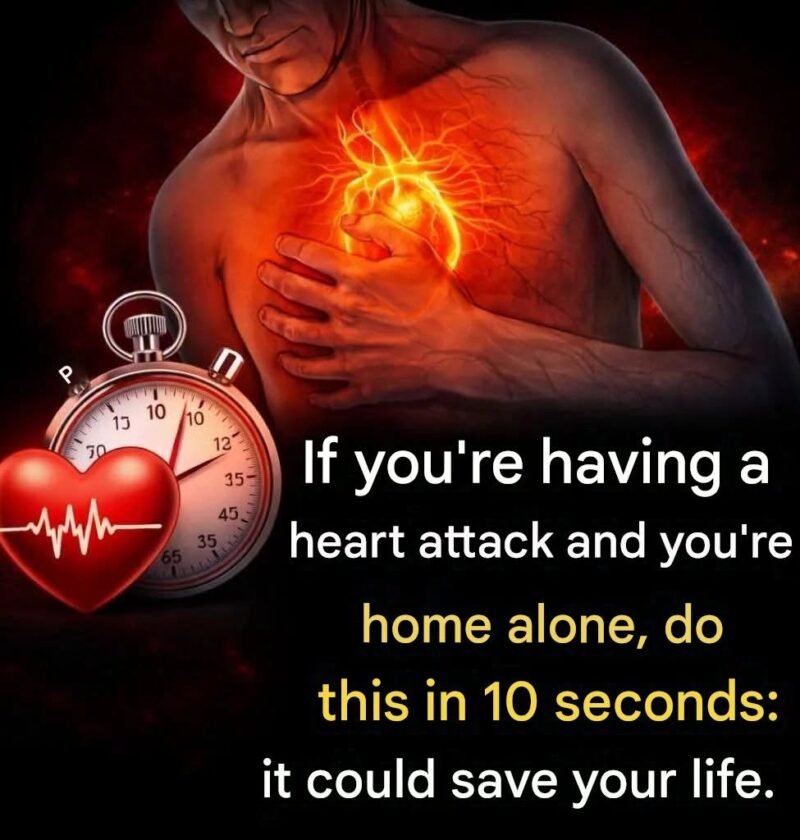
If you’re fact-checking “If you have a heart attack at home, do this in 10 seconds and you can save your life,” be very careful: this is usually referring to the viral “cough CPR” trick, and it is not recommended for people having a heart attack at home.
The American Heart Association specifically says cough CPR is not an effective treatment for a heart attack and should not be taught to ordinary first-aid responders. It has a very limited role in certain monitored hospital situations involving sudden abnormal heart rhythms—not at home.
W
www.heart.org
+1
What to actually do
If you suspect a heart attack:
Call your local emergency number immediately. Don’t wait to see whether the symptoms disappear.
W
www.heart.org
Sit down and rest in a comfortable position while waiting for help. Don’t drive yourself to the hospital.
N
nhs.uk
If you’re an alert adult with suspected non-traumatic chest pain, emergency/first-aid guidance allows 162–325 mg of aspirin to be chewed and swallowed, provided you aren’t allergic to aspirin and haven’t been told by a healthcare professional not to take it. If there’s uncertainty, wait for EMS.
C
cpr.heart.org
If the person becomes unresponsive and isn’t breathing normally, that’s cardiac arrest. Call emergency services, start hands-only CPR, and use an AED if one is available.
W
www.heart.org
Heart-attack warning signs can include pressure or squeezing in the chest, pain spreading to the arm, back, neck or jaw, shortness of breath, sweating, nausea, or lightheadedness.
W
www.heart.org
Bottom line: There is no proven “10-second trick” that stops a heart attack. Calling emergency services immediately is the action most likely to save a life.
W
www.heart.org
+1
W
N
C
Sources