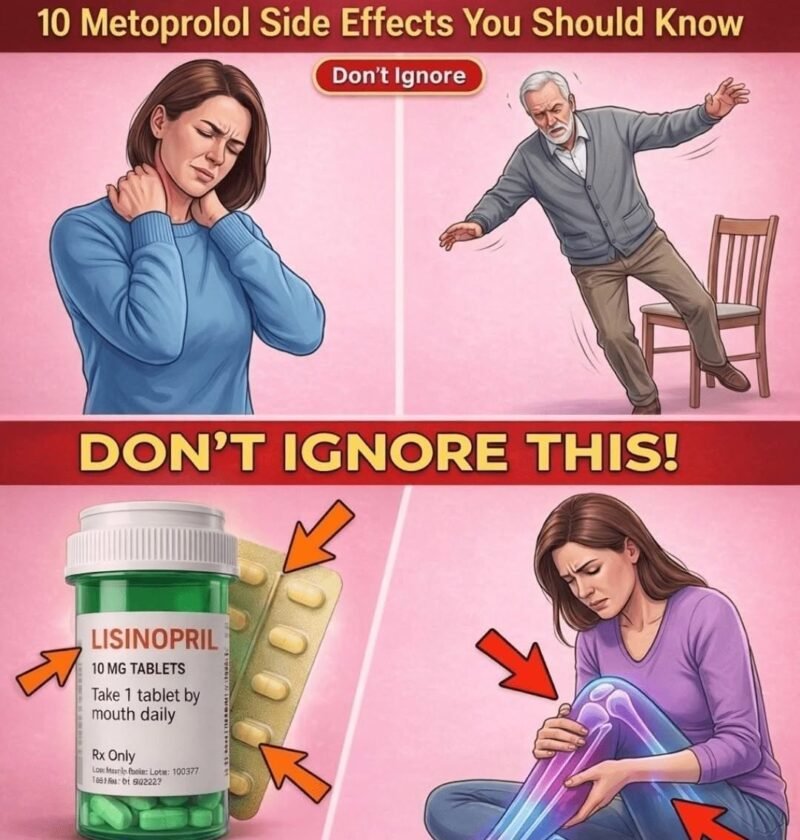
Articles listing “hidden side effects” of common heart medications like metoprolol often sensationalize normal pharmacological responses, framing them as secret dangers. However, looking past the clickbait, metoprolol is a beta-blocker, and like all beta-blockers, it alters how the cardiovascular and nervous systems function in ways that can cause side effects.
While doctors regularly discuss major risks like severe fatigue or a dangerously slow heart rate, some subtle or indirect effects are frequently overlooked in everyday conversations.
Overlooked or Less-Discussed Effects of Metoprolol
-
Masking the Warning Signs of Low Blood Sugar (Hypoglycemia): Because metoprolol slows down your heart rate and blocks adrenaline-like responses, it can hide classic symptoms of low blood sugar such as a racing heart, shakiness, and intense nervousness. People managing diabetes need to rely on alternative cues like sweating or dizziness instead.
-
Vivid Dreams, Sleep Disturbances, and Low Mood: Metoprolol is lipophilic (meaning it can cross the blood-brain barrier to some degree). While prescribed for the heart, it can occasionally impact the central nervous system, leading to unusual or vivid dreams, insomnia, subtle depressive moods, or a general lack of motivation that patients rarely connect back to their blood pressure pill.
-
Reduced Exercise Tolerance and “Beta-Blocker Fatigue”: Patients are often told they might feel a little tired at first, but the long-term impact on athletic performance or everyday stamina can be profound. Because the drug intentionally caps your heart rate to prevent it from spiking, your body loses its natural ability to ramp up cardiovascular output during physical exertion, making simple tasks like climbing stairs feel much heavier.
-
Cold Extremities (Raynaud-like Symptoms): By slowing the heart rate and redirecting blood flow toward core organs, beta-blockers frequently reduce peripheral circulation. This leaves many people dealing with persistently cold fingers and toes, even in mild weather.
-
Subtle Cognitive Fog or Memory Lapses: Particularly in older adults, the central nervous system effects of beta-blockers can occasionally manifest as mild forgetfulness, brain fog, or slowed thinking. These are often mistakenly brushed off as “just getting older” rather than evaluated as a potential medication side effect.
The Most Important Rule with Metoprolol
If you or someone you know is taking metoprolol and experiencing disruptive side effects, never stop taking it abruptly.
Abruptly quitting a beta-blocker can trigger a dangerous rebound effect, causing a sudden spike in heart rate and blood pressure that drastically increases the risk of chest pain or a heart attack. Any dosage adjustments or changes must be managed carefully by a prescribing physician.
Are you or a loved one currently taking metoprolol, or were you looking into how beta-blockers impact daily energy and health?