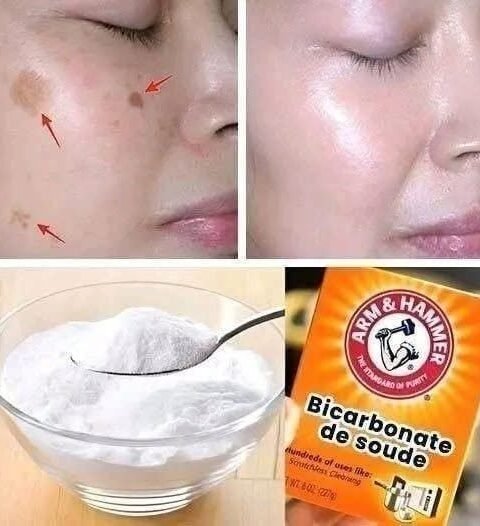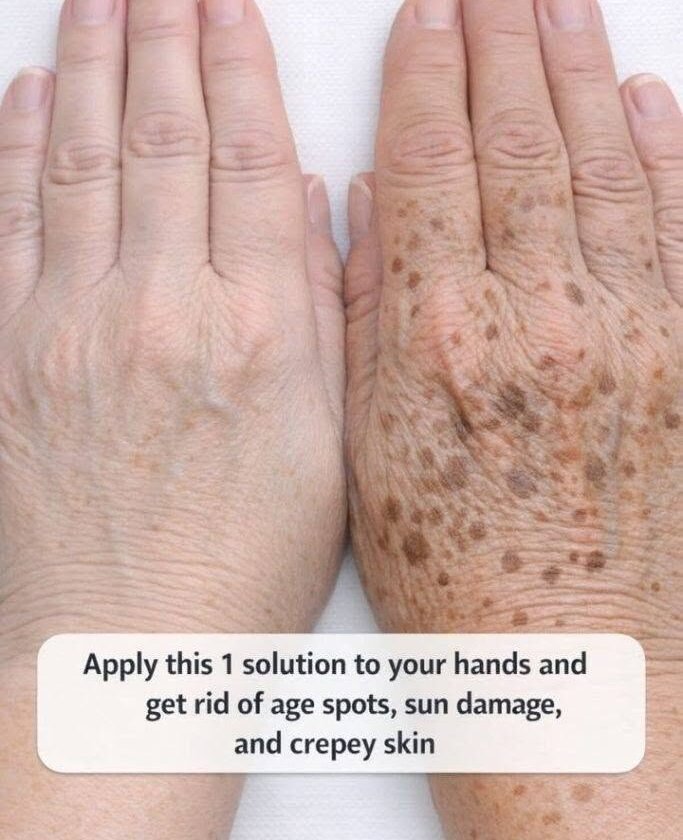
When we see viral claims or hear passed-down family remedies promising to erase dark age spots (also known as sun spots or liver spots) in “just 3 minutes with zero effort,” they are almost always referring to a classic kitchen pantry concoction: The Lemon Juice and Baking Soda (or Sugar) Scrub.
While no topical treatment can completely erase years of sun damage in three minutes, this old-school trick is famous because it creates an instant brightening effect that makes spots look temporarily lighter.
Here is the breakdown of what this “trick” usually entails, how the science works, and what you actually need to know before trying it:
The Classic 3-Minute Trick
The most common version of this remedy involves mixing two simple ingredients:
-
1 Teaspoon of Fresh Lemon Juice
-
1 Teaspoon of Baking Soda (or fine sugar)
How it’s used: The ingredients are mixed into a paste, gently rubbed onto the backs of the hands over the dark spots for about 1 to 2 minutes, left to sit for one more minute, and then rinsed off thoroughly with cool water.
How It Works (The Science Behind the “Magic”)
This trick relies on a quick combination of chemical and physical exfoliation:
-
Citric Acid (The Bleach): Lemon juice contains citric acid and natural Vitamin C. Citric acid acts as a mild, natural bleaching agent and an Alpha Hydroxy Acid (AHA). It helps break down the top layer of dead, pigmented skin cells.
-
Baking Soda (The Buffer/Scrub): Baking soda acts as a micro-exfoliant. By physically buffing away the dull, dead skin cells on the surface, fresh skin is exposed, making the hands immediately look brighter and smoother.
⚠️ The Reality Check: Why You Must Be Careful
While your hands might look noticeably brighter immediately after washing off this scrub, there are some very important caveats to keep in mind:
-
It’s Only Temporary: Age spots are caused by concentrated melanin deep in the skin resulting from decades of UV exposure. A 3-minute scrub only removes the very top layer of dead skin; it does not erase the actual pigment deep within the skin.
-
The Sun Risk (Phytophotodermatitis): This is the biggest danger of using citrus on your skin. Lemon juice makes your skin highly sensitive to UV rays. If you use this trick and then go outside into the sun without washing it off perfectly and applying strong sunscreen, you can develop severe chemical burns or actually cause the dark spots to get much worse (hyperpigmentation).
-
pH Disruption: Lemon juice is highly acidic and baking soda is highly alkaline. Mixing them on your skin can damage your natural moisture barrier if done too often, leading to dry, cracked, or irritated hands.
Better, Dermatologist-Approved Alternatives
If you want to truly fade age spots permanently with minimal effort, science offers better, safer long-term solutions:
-
Daily Sunscreen: The absolute #1 rule. The spots won’t fade if the sun keeps activating the melanin. Put SPF 30+ on the backs of your hands every single day.
-
Topical Vitamin C or Retinol: Apply a dedicated Vitamin C serum or a retinol hand cream at night to slowly and safely break down the pigment over a few months.
-
Laser Therapy: If you want a fast, zero-effort fix that actually works, a dermatologist can use an IPL (Intense Pulsed Light) laser to literally zap the pigment away in a single short session.
Did the trick you heard about involve lemon juice, or was it a different household ingredient like