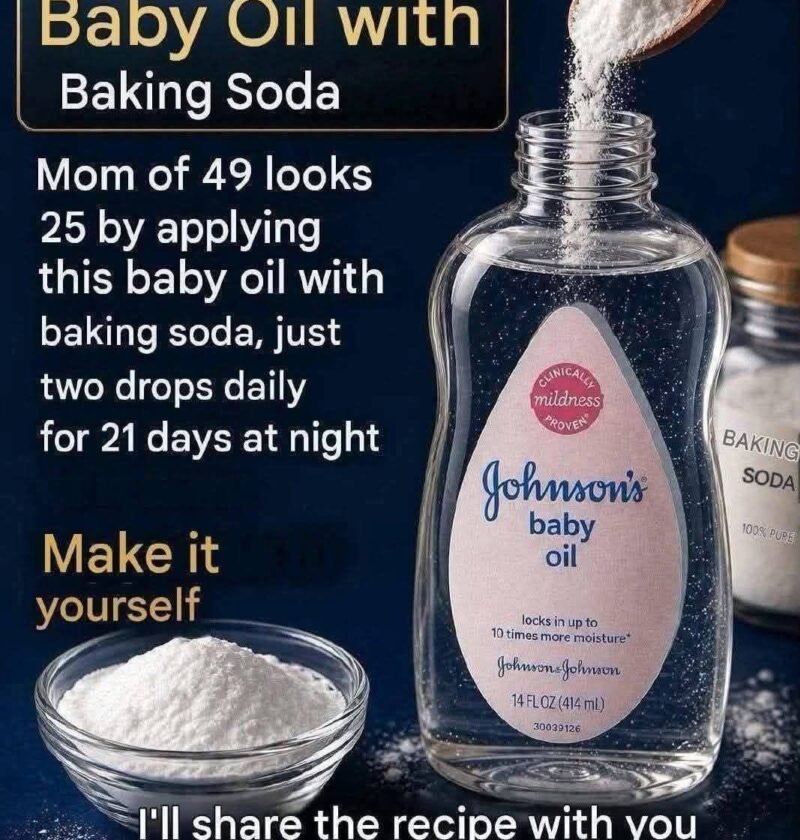
Combining baby oil and baking soda is a popular viral DIY remedy, usually touted as an all-in-one body scrub, skin softener, or quick fix for brightening dark patches (like elbows, knees, or underarms).
While it creates an inexpensive paste with a gritty texture, dermatologists and skincare experts advise caution when using this mixture.
What the Mixture Actually Does
-
Physical Exfoliation: The fine granules of baking soda act as a physical abrasive, helping to slough off dead skin cells, while the baby oil provides a heavy, occlusive base so the powder forms a spreadable paste and doesn’t scratch quite as harshly as it would dry.
-
Temporary Softening: Because baby oil is pure mineral oil, it locks in moisture and leaves rough patches (like heels or elbows) feeling temporarily slick and smooth.
The Hidden Risks (Why Dermatologists Warn Against It)
-
Severe pH Disruption: Your skin has a naturally acidic barrier (called the acid mantle) sitting around a pH of 4.5 to 5.5. Baking soda is intensely alkaline, with a pH of roughly 9. Mixing it onto your skin strips away natural protective oils and disrupts this balance, leading to long-term dryness, irritation, and a compromised skin barrier.
-
Micro-Tears and Redness: Even though baking soda feels fine compared to coarse sea salt, the crystals can still create microscopic tears on the skin’s surface, particularly if you scrub too hard.
-
Never Use on the Face: While some DIY trends suggest this for facial brightening or acne, putting a high-pH baking soda mixture on delicate facial skin can cause immediate redness, stinging, and breakouts.
Safe Alternative: If you want a gentle body scrub for rough areas like your legs or feet, it is much safer to use a pre-made body scrub formulated with a skin-friendly pH, or mix brown sugar with baby oil instead—sugar granules melt away easily and won’t throw off your skin’s chemical balance.
Were you looking to try this mixture for exfoliating rough skin, or for addressing a specific dark patch or skin concern?