The idea that a clue to your longevity might be hiding in plain sight on your fingertips has gained significant attention, largely driven by insights from Harvard Medical School genetics professor and longevity expert Dr. David Sinclair.
Rather than a single “fortune-telling” mark, doctors and researchers look at the speed of your fingernail growth and structural changes as physical proxies for your overall cellular health and biological aging.
1. The Big Clue: Fingernail Growth Rate
The core of this concept comes back to how quickly your body regenerates cells.
-
The Science: Landmark research indicates that the rate at which human fingernails grow naturally slows down by roughly 0.5% each year after age 25 to 30. Over a lifetime, this adds up to about a 50% reduction in growth speed.
-
Biological vs. Chronological Age: Dr. Sinclair highlights that because nail growth relies on efficient cellular turnover, circulation, and metabolism, faster-than-average nail growth for your age group can suggest a younger biological age and better physiological resilience. Conversely, a sharp slowdown can mirror how efficiently your body maintains itself internally.
2. Other Telltale Nail Signs Doctors Watch For
Beyond growth speed, physicians and specialists look at the structural appearance of nails to gauge systemic health:
-
Nail Clubbing: When the fingertips widen and the nails curve downward around the tips, it often points to chronically low blood oxygen levels, which can be linked to underlying heart or lung conditions.
-
Texture and Color Changes:
-
Pale or white nails can sometimes signal anemia, malnutrition, or poor circulation.
-
Brittle, slow-growing nails frequently tie back to thyroid dysfunction, iron deficiencies, or declining vascular health.
-
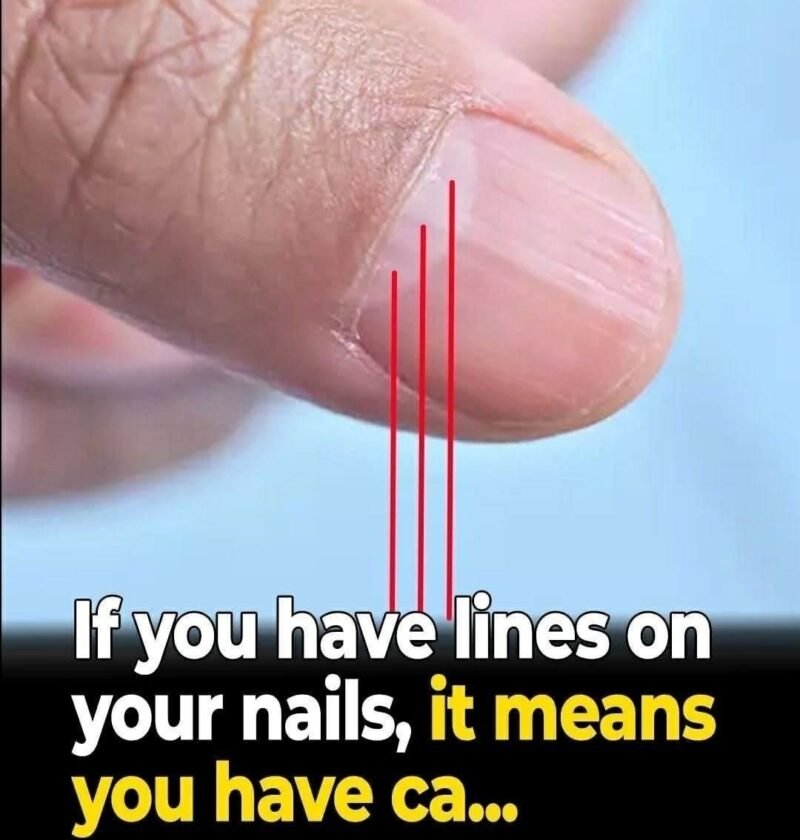
Dark streaks under the nail bed require a professional medical evaluation to rule out serious conditions like subungual melanoma.
-
The Takeaway: While tracking how often you need to trim your nails isn’t a definitive diagnostic tool on its own, it serves as a fascinating, easily observable window into how well your body’s cellular maintenance and circulation are holding up over time.
Have you noticed any distinct changes in how fast your nails grow or in their texture recently?