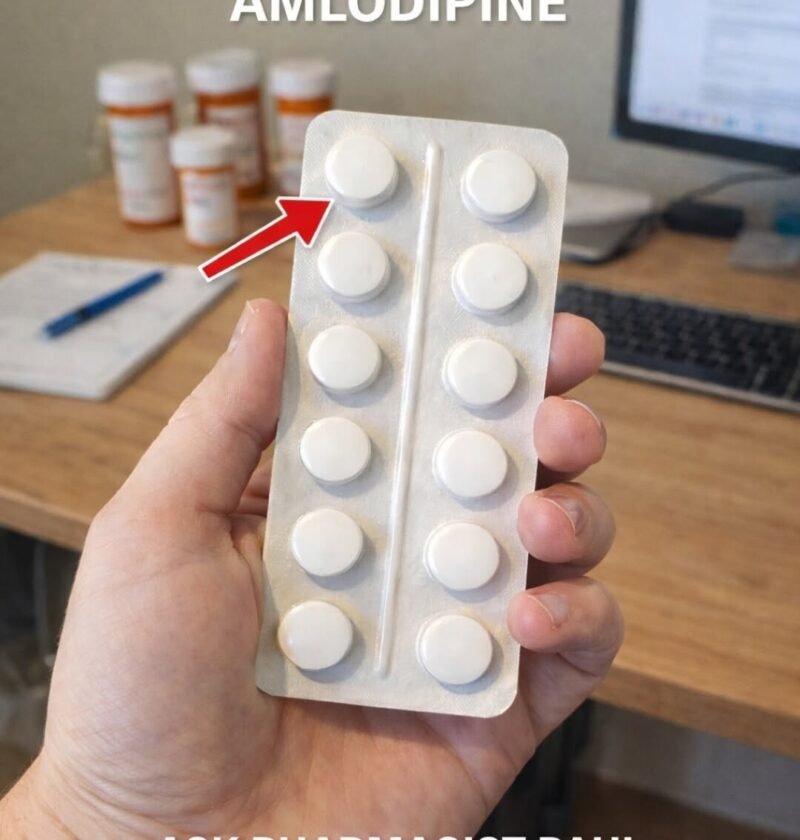
8 Habits You Should Stop This Year If You Are Taking Amlodipine — And Why
Amlodipine is a calcium-channel blocker commonly used to treat high blood pressure and certain types of angina. It works by relaxing blood vessels, allowing blood to flow more easily.
M
MedlinePlus
+1
Taking amlodipine doesn’t mean you need to live a restricted life. But several everyday habits can make blood-pressure control more difficult or make side effects more noticeable.
1. Stop skipping doses because you feel fine
High blood pressure often has no obvious symptoms. Feeling normal doesn’t necessarily mean your blood pressure is controlled.
Amlodipine is generally taken once daily, and it should be taken consistently as prescribed. Don’t stop it simply because your readings improve or you feel well.
M
MedlinePlus
2. Stop eating an excessively salty diet
Amlodipine lowers blood pressure, but a diet consistently high in sodium can work against blood-pressure control.
Limit heavily salted foods, processed meats, packaged snacks, instant noodles, pickles and other high-sodium foods. If your clinician has recommended a low-sodium diet, follow that advice carefully.
M
MedlinePlus
3. Stop ignoring swollen ankles
Swelling of the feet, ankles or lower legs is one of amlodipine’s best-known side effects. In clinical trials, edema occurred more frequently at higher doses.
D
DailyMed
+1
Don’t automatically assume that swollen ankles are harmless. Tell your prescriber if swelling is persistent, worsening, painful, or interfering with walking. Your clinician may adjust treatment rather than having you simply tolerate it.
4. Stop standing up too quickly if you get dizzy
Amlodipine can cause dizziness or lightheadedness.
M
MedlinePlus
If you’re experiencing this, rise slowly from bed or a chair and hold onto something stable until you feel steady. Frequent dizziness or fainting needs medical evaluation, especially in older adults because of the risk of falls.
5. Stop treating alcohol as if it has no effect on you
Amlodipine isn’t automatically incompatible with alcohol, but alcohol can contribute to dizziness and low blood pressure in some people.
If you notice lightheadedness after drinking, it’s sensible to avoid or substantially limit alcohol and discuss the reaction with your healthcare professional.
6. Stop assuming every medication or supplement is automatically safe to combine
Tell your doctor and pharmacist about all prescription drugs, over-the-counter medicines, vitamins and herbal supplements you take. Certain medications can increase amlodipine concentrations and potentially increase problems such as low blood pressure or edema.
D
DailyMed
One commonly repeated warning deserves clarification: grapefruit juice has not been shown to significantly affect amlodipine levels in the clinical study described in its prescribing information.
D
DailyMed
However, grapefruit can interact with many other medicines, so your complete medication list matters.
U
U.S. Food and Drug Administration
7. Stop being inactive
Medication works best alongside healthy lifestyle habits. Regular physical activity, maintaining a healthy weight, eating a heart-healthy diet and avoiding smoking can all contribute to better cardiovascular health.
M
MedlinePlus
If you haven’t exercised recently, start gradually and choose activities appropriate for your fitness level and medical conditions.
8. Stop ignoring unusual chest pain, fainting or a racing/irregular heartbeat
These symptoms deserve medical attention rather than being dismissed as an ordinary medication side effect. MedlinePlus specifically advises contacting a healthcare professional or seeking emergency treatment for more frequent or severe chest pain, fainting, or a rapid, pounding or irregular heartbeat.
M
MedlinePlus
The most important rule
Don’t stop amlodipine or change your dose on your own. If you’re experiencing ankle swelling, dizziness, flushing, palpitations, fatigue or another troublesome symptom, talk with your prescriber. Amlodipine is often very effective, and the solution may be adjusting the dose or changing the treatment rather than abandoning blood-pressure therapy.
M
MedlinePlus
Bottom line: The habits worth changing aren’t really about “amlodipine restrictions.” They’re about avoiding behaviors that undermine blood-pressure control, recognizing side effects early, and making sure your doctor knows about every medication you’re taking.
M
D
U
Sources