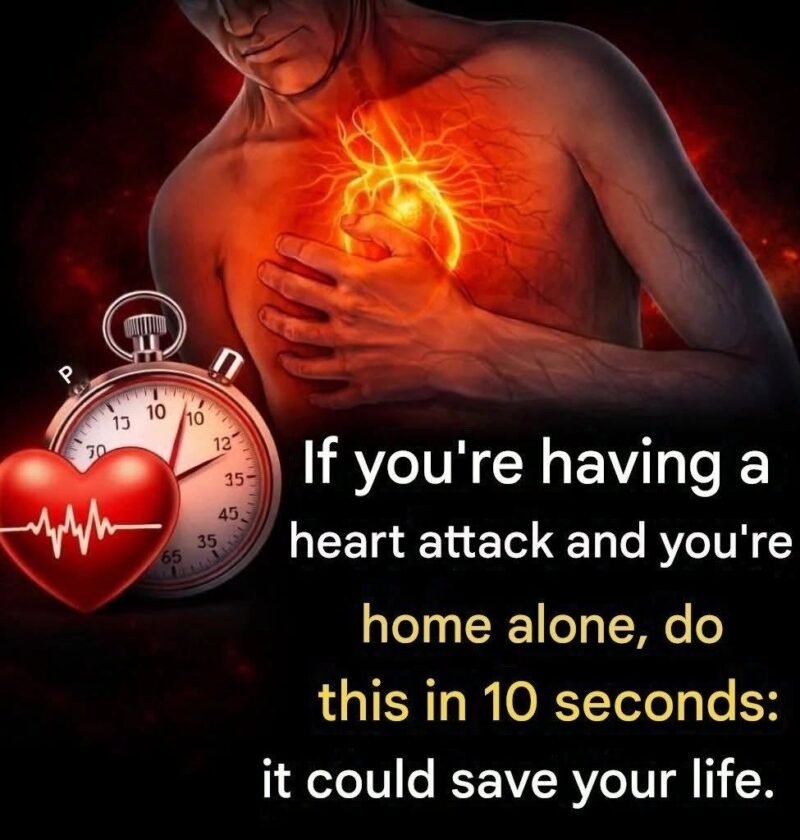
If You Think You’re Having a Heart Attack, Don’t Wait 10 SecondsThere is no proven 10-second maneuver that can stop a heart attack at home. Claims about coughing forcefully, drinking water, changing position, or performing another “secret trick” can dangerously delay treatment.
A heart attack occurs when blood flow to part of the heart is blocked, and every minute matters.
What you should actually do
- Call your local emergency number immediately. Don’t drive yourself to the hospital.
- Sit down and rest while waiting for emergency responders.
- If you’re an alert adult with non-traumatic chest pain, current first-aid guidance says you may chew and swallow 162–325 mg of aspirin, unless you’re allergic to aspirin or have been told by a healthcare professional not to take it. If you’re uncertain whether aspirin is appropriate, wait for EMS.
- Follow the emergency dispatcher’s instructions.
- If the person becomes unresponsive and isn’t breathing normally, this may be cardiac arrest rather than simply a heart attack. Call emergency services and begin hands-only CPR; use an AED if one is available.
❤️ Know the symptoms
Possible heart-attack symptoms include pressure or pain in the chest, shortness of breath, sweating, nausea, lightheadedness, or discomfort in the arm, back, neck, jaw, or upper abdomen. Symptoms can be less typical in women, older adults, and people with diabetes.
If this is happening to you or someone with you right now, call emergency services now rather than trying a home remedy.