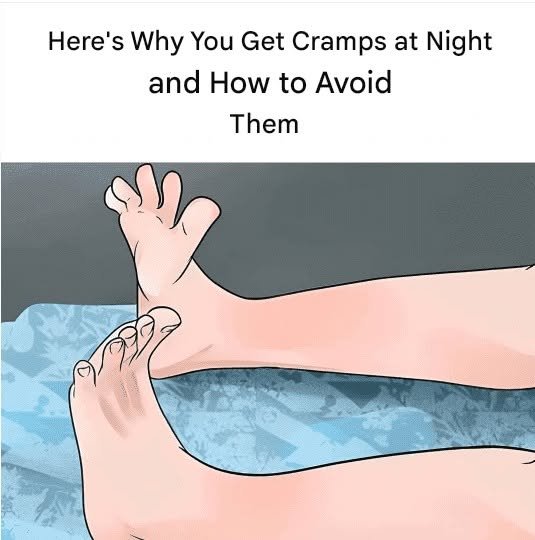
This Is Why We Get Cramps at Night
Have you ever been jolted awake by a sudden, painful tightening in your calf or foot?
Nighttime leg cramps are common—and there isn’t always one single cause.
A cramp happens when a muscle suddenly contracts and doesn’t relax normally. They often affect the calves, feet, or thighs and can last from a few seconds to several minutes.
🦵 Why do they happen?
1. Muscle fatigue or overuse
A hard workout, unusually long walk, or spending a lot of time on your feet can sometimes trigger cramps.
2. Staying in one position
Long periods of sitting or changes in how you position your legs while sleeping may contribute in some people.
3. Pregnancy and aging
Nighttime cramps become more common during pregnancy and with increasing age.
4. Certain medications
Some medicines can increase the likelihood of muscle cramps. If cramps began after starting a medication, don’t stop it yourself—ask your healthcare professional whether it could be contributing.
5. Nerve or circulation problems
Certain nerve disorders and other medical conditions can be associated with recurrent cramps.
6. Dehydration or mineral problems
Fluid or electrolyte disturbances can contribute in some situations, but not every nighttime cramp means you need more magnesium, potassium, or salt.
🆘 What can you do during a cramp?
When a cramp strikes, gently stretch and massage the affected muscle.
For a calf cramp, try straightening the leg and gently pulling the toes toward you. Standing and putting weight on the affected leg may also help some people.
🌿 How can you reduce them?
Try:
✔️ Staying adequately hydrated
✔️ Regular gentle stretching, particularly if cramps are frequent
✔️ Gradually increasing exercise rather than suddenly overloading your muscles
✔️ Reviewing medications with your healthcare professional if cramps started after a medication change
⚠️ When should you get checked?
Talk with a healthcare professional if cramps are frequent, severe, worsening, disturbing your sleep regularly, or accompanied by muscle weakness, numbness, swelling, or other unusual symptoms.
Don’t automatically start high-dose mineral supplements. Too much of certain minerals can also cause health problems.
💡 The takeaway: Nighttime cramps are common and often harmless, but recurrent cramps can sometimes point to an underlying issue. The goal isn’t to guess which supplement you need—it’s to understand what’s triggering them.