“Natural and Powerful Homemade Weed Control” — what actually works?
Homemade weed killers are popular because they sound safer than commercial herbicides. But “natural” doesn’t automatically mean harmless, and many viral recipes can damage the soil and nearby plants.
🧴 What about vinegar?
Vinegar contains acetic acid, which can burn weed foliage on contact. Ordinary household vinegar is usually around 5% acetic acid, and it works best on small, young annual weeds. Established perennial weeds can often recover because their roots remain alive.
🧂 Be careful with salt
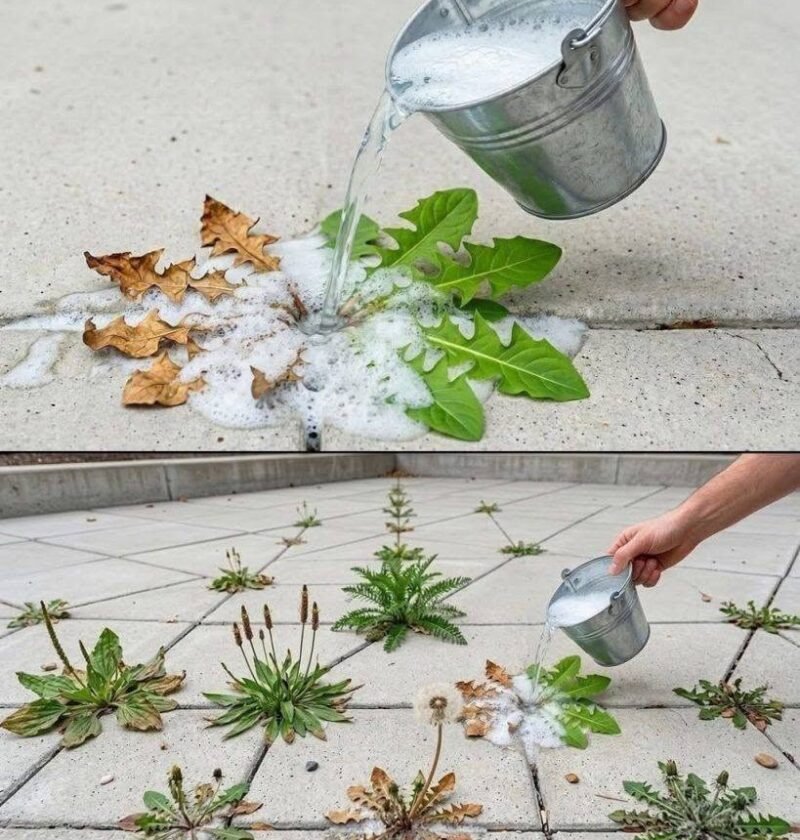
Many recipes combine vinegar, salt and dish soap. Salt can kill vegetation, but repeated use can accumulate in soil and damage desirable plants and soil health. Extension specialists generally don’t recommend salt-based weed killers where you want plants to grow later.
🔥 A safer nonchemical option
For weeds growing through sidewalk or patio cracks, carefully pouring boiling water over them can kill exposed plant tissue. It may need to be repeated, and it can also kill any desirable plant it contacts.
For garden beds, hand-pulling followed by mulch is usually a better long-term approach. A layer of organic mulch can suppress new weed growth without deliberately salting the soil.
⚠️ Don’t use concentrated vinegar casually
Horticultural vinegar can contain 10–30% acetic acid and is substantially more hazardous than kitchen vinegar. Concentrated products can cause serious skin and eye injuries and should only be used according to their pesticide labels and safety instructions.