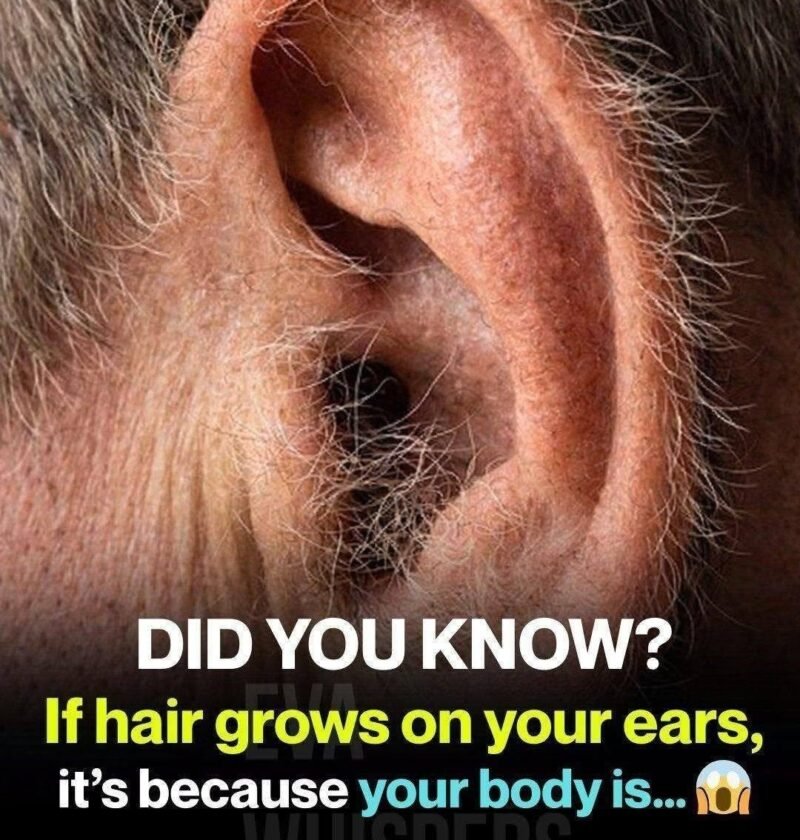
👂 “What Your Ear Hair Says About Your Health” — what’s actually true?Ear hair usually doesn’t tell you that something is wrong with your health. Noticeable hair on or around the outer ear becomes more common with age, particularly in men, and genetics and changing hormone levels appear to play important roles.
What different changes may mean
- More ear hair as you age: Usually a normal aging-related change rather than a disease.
- Sudden or unusually extensive hair growth: This is less typical. Certain medications and, rarely, hormonal or other medical conditions can cause excessive hair growth.
- Hair inside the ear canal: Small amounts are normal and can help keep debris out. Excessive hair can occasionally contribute to problems such as swimmer’s ear.
- Ear hair and heart disease: Some older observational studies have reported an association between ear-canal hair and coronary artery disease. However, this doesn’t establish that ear hair causes heart disease or that it can diagnose it. You shouldn’t undergo heart testing simply because you have hairy ears.
✂️ Can you remove it?
Yes. If it’s bothersome, trimming visible outer-ear hair is generally reasonable. Be careful about putting sharp objects deep into the ear canal. A healthcare professional can advise you on safer removal if the hair is extensive.
🚩 When should you mention it to a doctor?
If new, rapid, or unusually widespread hair growth appears—especially together with other changes such as significant acne, menstrual irregularities, voice changes, or other signs of hormonal imbalance—it’s worth discussing with a clinician.
Bottom line: Hairy ears are usually a cosmetic or a