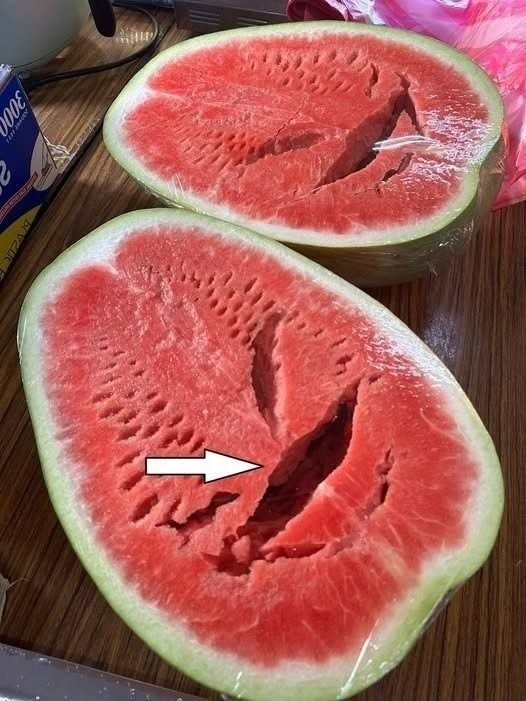
If you open a watermelon and see something unusual, don’t automatically assume it’s spoiled or unsafe. The appearance matters.
🍉 Common things you might see
- Yellow/orange flesh: Some watermelon varieties naturally have yellow or orange flesh. If the fruit smells and tastes normal and has been stored properly, the color itself isn’t a problem.
- White streaks or patches: Pale areas can occur from growing conditions or uneven ripening. Texture and smell are more important than color alone.
- Small cracks or hollow areas: “Hollow heart” can produce gaps or cracks inside the flesh. It affects quality but isn’t necessarily dangerous by itself.
- Black, brown, or mushy areas: These are more concerning, particularly if accompanied by an unpleasant or fermented smell. Discard watermelon showing obvious spoilage.
- Fuzzy mold: If you see visible mold, don’t simply cut around the affected area. Because watermelon is a soft, high-moisture fruit, contamination can extend beyond what you can see. Discard it.
🚨 The biggest warning signs
Don’t eat the watermelon if it has:
- A foul, fermented, or rotten odor
- Slimy or unusually soft flesh
- Extensive brown/black discoloration
- Visible mold
- Juice leaking from an otherwise intact fruit
- A suspicious appearance after being improperly refrigerated or left at room temperature for too long
Once watermelon has been cut, refrigerate it promptly and keep it at 40°F (4°C) or below. Perishable cut fruit shouldn’t be left at room temperature for more than 2 hours (or 1 hour when temperatures are above 90°F/32°C). (fda.gov)