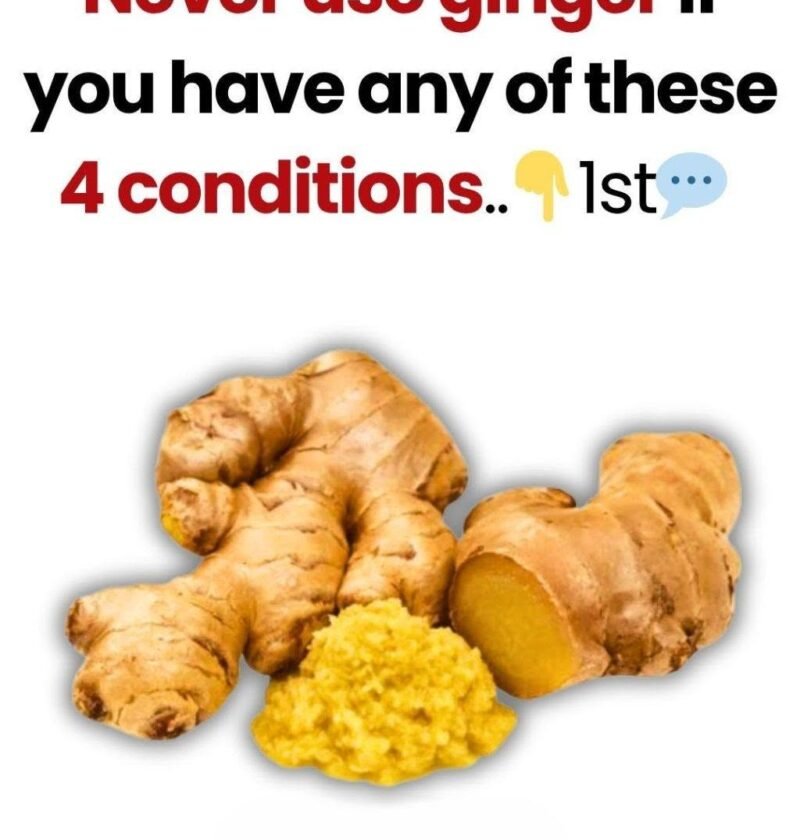
The headline “Ginger is healthy for most people — but not for everyone” is broadly reasonable, but the idea that there are exactly four conditions in which everyone must avoid ginger would be too simplistic.
Ginger is generally well tolerated in food amounts. Supplements and concentrated extracts are more likely to cause problems or interact with medicines.
4 situations where you should be cautious
- Bleeding disorders or blood-thinning medication
Ginger may affect platelet aggregation, so concentrated ginger supplements could potentially increase bleeding risk, particularly with anticoagulants or antiplatelet drugs. Evidence about the size of this interaction isn’t completely conclusive, so discuss supplements with your doctor/pharmacist. - Gallstones or gallbladder disease
Ginger may increase bile flow. People with gallstones are therefore advised to avoid ginger supplements or discuss them with a healthcare professional before using them. - Diabetes or medications that lower blood sugar
Ginger may lower blood glucose, potentially adding to the effect of insulin or diabetes medicines. If you have diabetes, monitor your glucose appropriately and ask your clinician before taking concentrated ginger supplements. - Before surgery
Because of the possible effects on blood clotting, healthcare professionals may recommend stopping ginger supplements before surgery. Don’t stop prescribed medicines without your surgical team’s instructions.
What about ordinary ginger in food?
This distinction is important. Using a little fresh ginger in cooking or drinking occasional ginger tea isn’t the same as taking a concentrated ginger extract or high-dose supplement. The strongest safety concerns generally relate to supplemental/high-dose use.