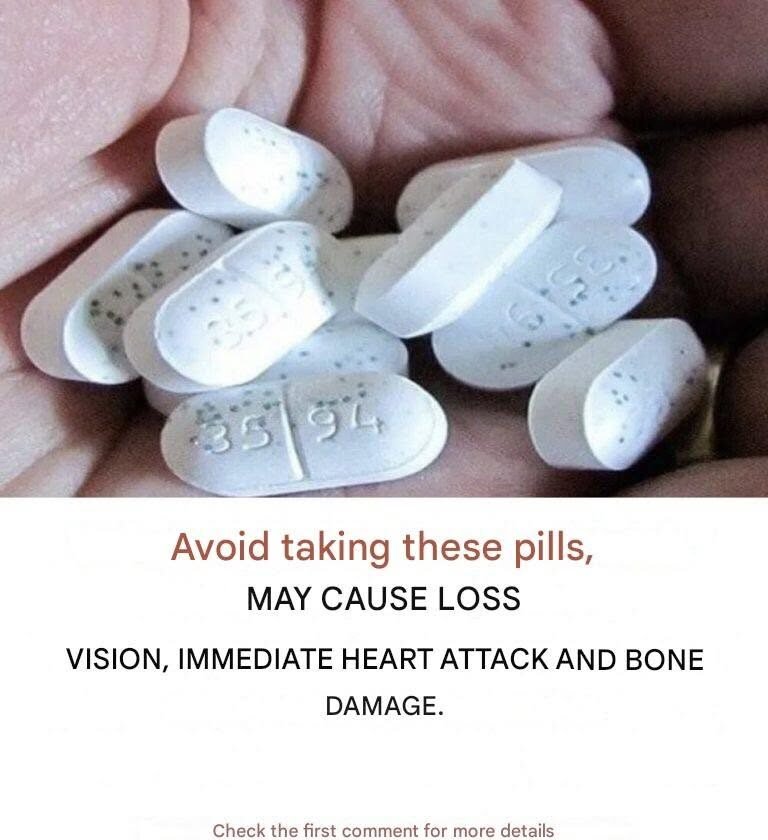
That headline is too vague to be safe—the specific tablet matters. Some medicines can increase the risk of blood clots, heart attack, or stroke, but others do not.
For example:
- Non-aspirin NSAIDs such as ibuprofen and naproxen can increase the risk of serious cardiovascular thrombotic events, including heart attack and stroke. The risk can increase with higher doses and longer use.
- Combined estrogen-containing birth-control pills have a rare but recognized risk of blood clots, heart attack, and stroke, with risk depending on individual factors.
- Aspirin is different: it can reduce certain clot-related heart attacks and strokes in appropriate patients, but it can also cause serious bleeding. It should not be started or stopped for cardiovascular prevention without medical advice.
🚨 Don’t ignore these symptoms
If someone taking a medication develops new chest pain, trouble breathing, sudden weakness/numbness on one side, or sudden difficulty speaking, seek emergency medical care. These can be signs of a heart attack, stroke, or other serious cardiovascular problem.
If you tell me the name of the tablet (or send a photo of the package), I can explain its actual blood-clot and heart-attack risks, who is most vulnerable, and whether it should be stopped or continued.