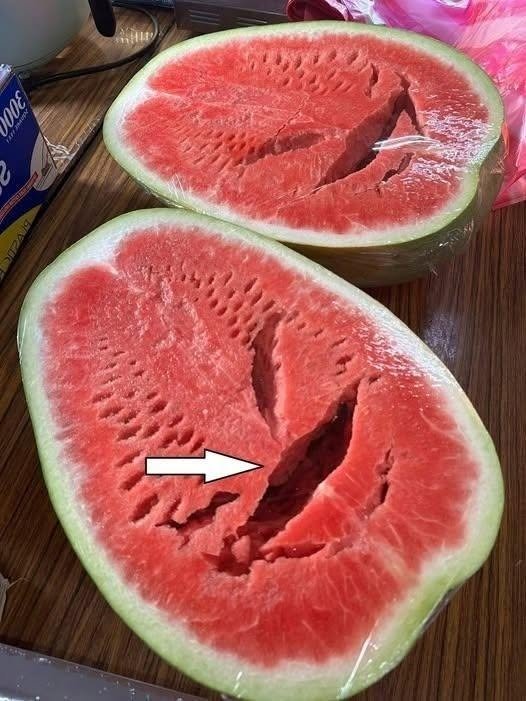
If you’re asking whether the warning “You cut open a watermelon and saw cracks? Stop eating it immediately!” is medically accurate: not necessarily.
Cracks inside a watermelon can have several causes, and cracks alone do not prove that the watermelon is unsafe.
🍉 What can internal cracks mean?
- Hollow heart: Internal gaps or cracks can occur as the fruit develops. The flesh may have a split or cavity while still being perfectly edible.
- Growth stress: Rapid changes in water availability or growing conditions can cause internal cracking.
- Over-ripeness or physical damage: Handling and storage can sometimes contribute to splitting.
- Spoilage: If the cracks are accompanied by mold, slimy or unusually soft flesh, a fermented/alcohol-like smell, discoloration, or an unpleasant taste, that’s a reason to discard the watermelon.
🚨 When should you NOT eat it?
Don’t eat it if the watermelon has:
- visible mold,
- a foul, fermented, or rotten odor,
- slimy flesh,
- significant mushiness,
- leaking juice or obvious decomposition.
And don’t rely on taste to determine whether food is safe if it already looks or smells spoiled.