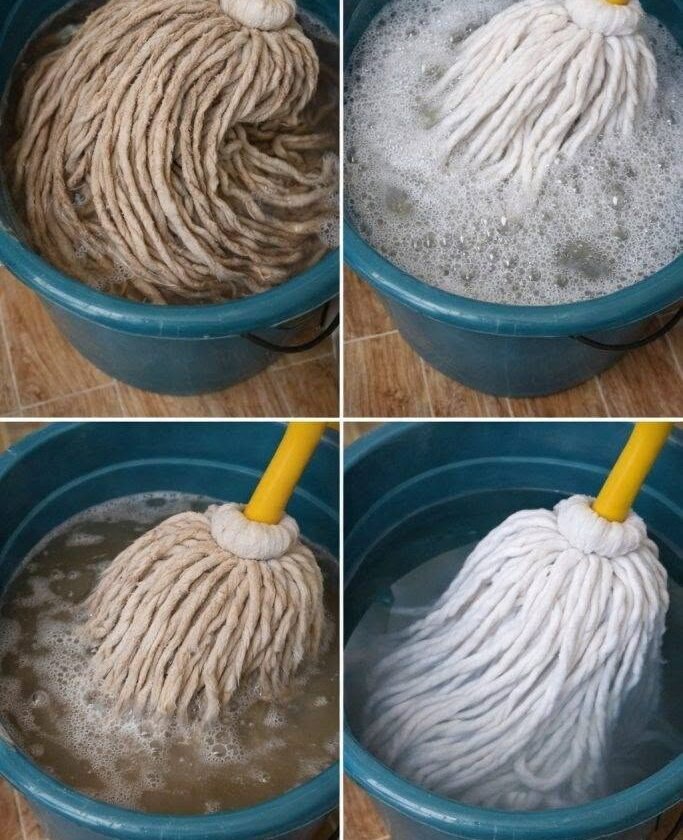
That headline is clickbait. A filthy mop usually needs thorough washing and rinsing, not a magical “drop” of one ingredient. Vinegar can help with odors and some buildup, but it isn’t a universal disinfectant and isn’t appropriate for every mop or floor surface.
A safer way to revive a dirty mop
- Rinse the mop thoroughly with clean water to remove loose dirt.
- Soak or wash the mop head using warm water and a small amount of detergent, following the manufacturer’s washing instructions.
- Rinse extremely well so detergent and loosened grime aren’t left behind.
- Disinfect only when appropriate, using a suitable disinfectant according to its label.
- Let the mop dry completely before storing it. A damp mop can develop unpleasant odors and microbial growth.
If you want to use vinegar
A small amount of white vinegar diluted with water may help deodorize some washable mop heads, but check the manufacturer’s instructions first. Vinegar can damage some materials and flooring, including certain natural stone surfaces.
Most important: never mix vinegar with bleach. Acidic vinegar can react with bleach and release toxic chlorine gas. The CDC likewise advises never mixing bleach with other cleaners or disinfectants.
So, rather than “one drop and your mop is like new,” the reliable formula is wash + rinse + dry thoroughly.